Category: Business & Career

  • The “Quiet Ambition” Era: Redefining Success Beyond the Corner Office

    The “Quiet Ambition” Era: Redefining Success Beyond the Corner Office

    The “Quiet Ambition” Era: Redefining Success Beyond the Corner Office

    In the early 2020s, the “Hustle Culture” reached its fever pitch. We were told to “rise and grind,” optimize every second for monetization, and sacrifice our health for a title. But by 2026, the pendulum has swung. We are now living in the era of Quiet Ambition.

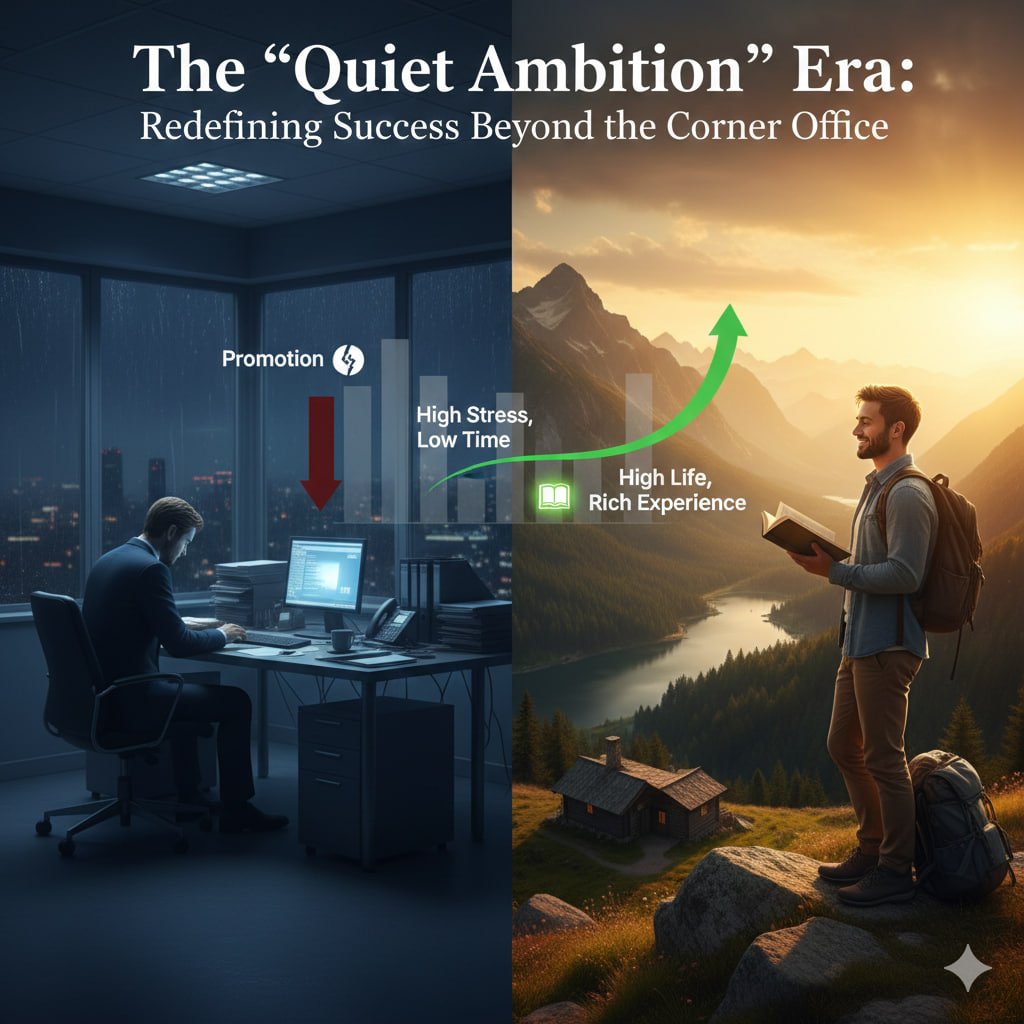
    Quiet Ambition isn’t about a lack of drive; it’s about a redirection of drive. It is the conscious choice to decouple “success” from “climbing the corporate ladder.” People are no longer asking, “How do I get my boss’s job?” Instead, they are asking, “How do I build a life I don’t need a vacation from?”


    The Shift: From Vertical to Horizontal Growth

    The traditional career path was a vertical line. Quiet Ambition treats a career as a Portfolio of Experiences.

    • Vertical Ambition: Chasing the VP title, managing 50 people, and accepting a 24/7 “on-call” lifestyle for a 20% raise.
    • Quiet (Horizontal) Ambition: Mastering a high-value skill, working 30 hours a week, and using the reclaimed time for “Wealth of Life”—hobbies, family, and community.

    The Three Drivers of Quiet Ambition

    1. The “Middle Management” Burnout

    The realization has set in that middle management is the most stressed layer of the workforce. They bear the pressure from the top and the complaints from the bottom. Quietly ambitious workers are increasingly opting out of management tracks to remain “Individual Contributors” (ICs), where they can focus on the work they actually enjoy.

    2. The Experience Economy

    In 2026, status symbols have shifted. A corner office or a luxury car carries less social weight than the ability to spend a Tuesday afternoon hiking or the freedom to work from a different country for three months a year. Time is the new Rolex.

    3. The “Identity Divorce”

    We are seeing a mass “identity divorce” where people no longer introduce themselves by their job title. When your identity isn’t tied to your employer, you are less likely to sacrifice your well-being for a “Senior” prefix on your LinkedIn profile.


    How Companies are Adapting

    Forward-thinking organizations are realizing they can’t motivate this new workforce with titles alone. They are implementing:

    Traditional IncentiveQuiet Ambition Alternative
    Promotion to ManagerSubject Matter Expert (SME) Tracks
    Performance BonusesSabbatical Credits & Time-Off Bonuses
    Office Perks (Snacks/Gym)Radical Flexibility & Remote Autonomy

    Are You Quietly Ambitious?

    You might be part of this movement if you:

    • Have turned down a promotion because it would “ruin your schedule.”
    • Value “Flow State” more than “Face Time” in meetings.
    • Work to fund your life, rather than living to fuel your work.
    • Prioritize “Peace of Mind” as a key performance indicator.

    “Quiet Ambition is the realization that ‘making it’ doesn’t mean having the most power; it means having the most agency over your own Tuesday morning.”
  • The Green Bottom Line: How Sustainability-First Companies are Outperforming the Market.

    The Green Bottom Line: How Sustainability-First Companies are Outperforming the Market.

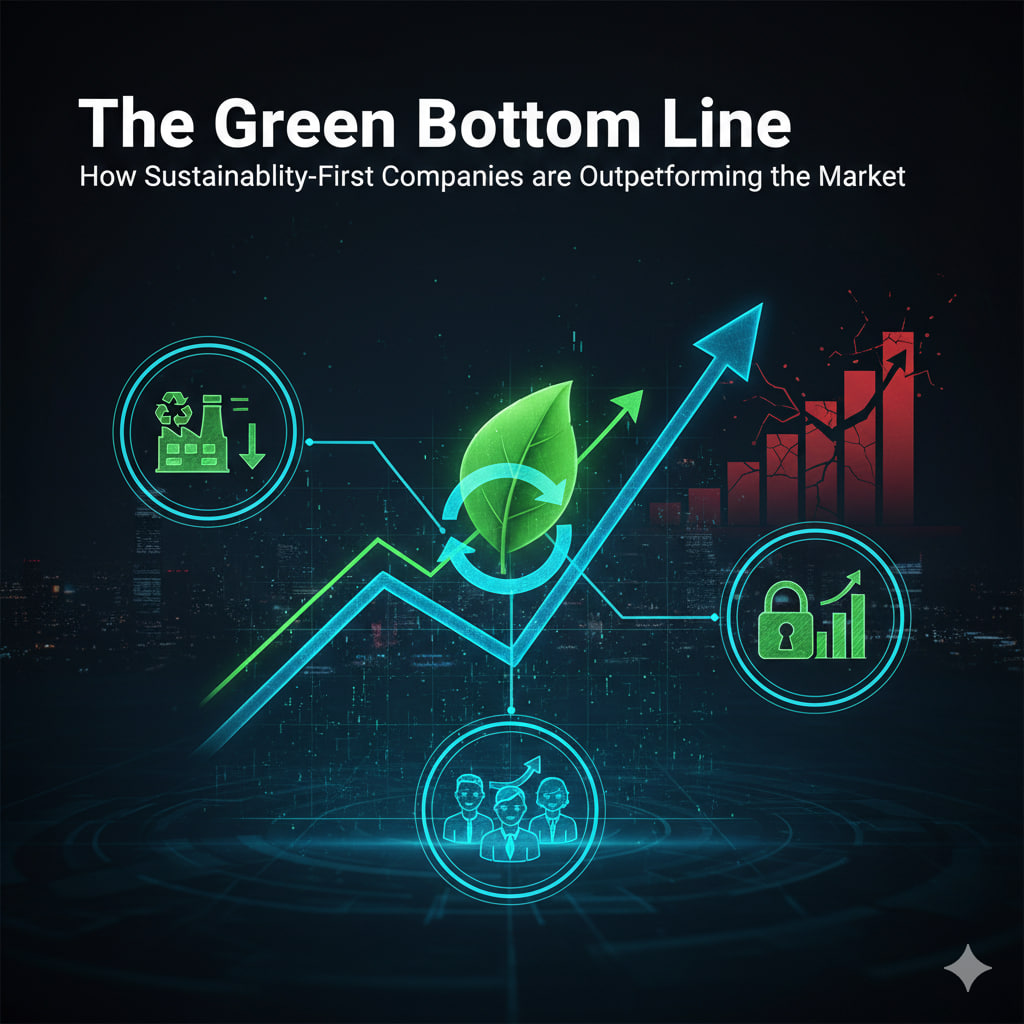
    The Green Bottom Line: How Sustainability-First Companies are Outperforming the Market

    For decades, the prevailing corporate wisdom was that sustainability was a “cost center”—an expensive philanthropic endeavor that came at the expense of shareholder profits.

    By 2026, that narrative has been completely inverted. Data from the global markets shows a clear trend: companies that prioritize Environmental, Social, and Governance (ESG) metrics are not just “doing good”—they are consistently outperforming their less-sustainable competitors in terms of stock price, talent acquisition, and long-term resilience.


    The “Sustainability Premium”

    Why are green companies winning? It’s not just about positive PR; it’s about Efficiency and Risk Mitigation.

    1. Resource Circularity equals Cost Savings

    Sustainability-first companies don’t just “reduce waste”; they implement Circular Economy models. By designing products that can be easily refurbished or recycled, they reduce their dependence on volatile raw material markets.

    • The ROI: Companies using circular supply chains have seen a 15–20% reduction in manufacturing costs as they “mine” their own old products for parts.

    2. The War for Talent

    In 2026, the labor market is driven by values. Over 75% of Gen Z and Millennial workers—who now make up the majority of the global workforce—state they would take a pay cut to work for a company with a strong environmental mission.

    • The ROI: Lower turnover rates and higher employee engagement lead to significantly lower recruitment costs and higher “Output per Human Hour.”

    3. Lower Cost of Capital

    Financial institutions have recognized that climate change is a financial risk. Consequently, “Green Bonds” and sustainability-linked loans offer lower interest rates to companies that hit specific carbon-reduction targets.

    • The ROI: Sustainability-first firms often enjoy a 50 to 100 basis point advantage in their cost of debt compared to “Brown” (polluting) firms.

    The Risk of the “Laggard Penalty”

    While green companies are rewarded, “laggards” are facing a mounting penalty:

    • Stranded Assets: Fossil-fuel-heavy infrastructure is being devalued faster than anticipated.
    • Regulatory Walls: New carbon taxes in the EU and North America are turning “cheap” polluting processes into “expensive” liabilities.

    How to Implement a “Green Bottom Line” Strategy

    Moving toward sustainability requires a shift from compliance to strategy.

    Focus AreaTraditional ApproachSustainability-First Approach
    Supply ChainLowest cost, regardless of source.Resilience-First: Localized, low-carbon, and ethically audited.
    Product DesignPlanned obsolescence.Design for Longevity: Modular parts and “Product-as-a-Service” models.
    ReportingFinancials only.Double Materiality: Reporting on how the world affects the company and how the company affects the world.

    The 2026 Verdict

    The “Green Bottom Line” proves that the interests of the planet and the interests of the portfolio are finally aligned. In the high-transparency era of 2026, you cannot hide a dirty supply chain, and you cannot afford the inefficiency of waste.

    “Sustainability is no longer a moral choice; it is a fiduciary duty. If you aren’t green, you’re eventually going to be in the red.”

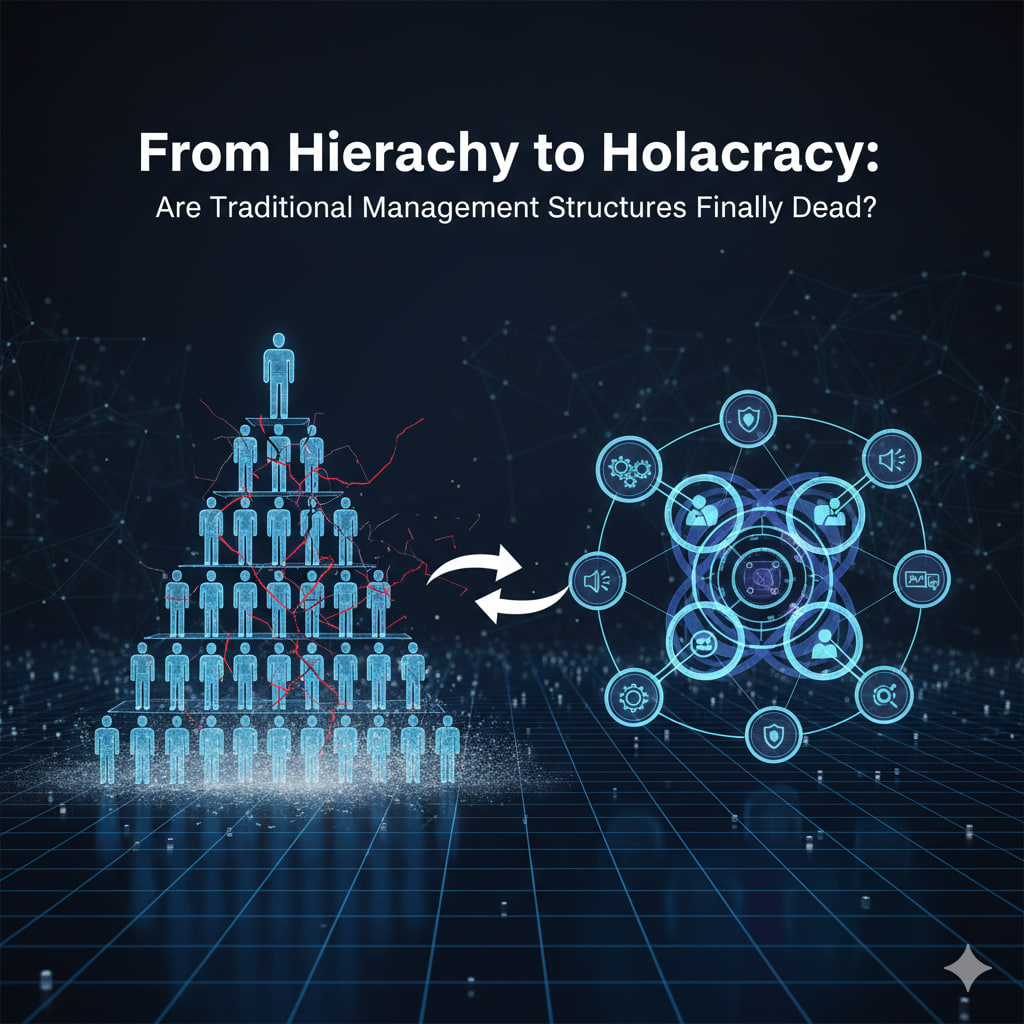
  • From Hierarchy to Holacracy: Are Traditional Management Structures Finally Dead?

    From Hierarchy to Holacracy: Are Traditional Management Structures Finally Dead?

    From Hierarchy to Holacracy: Are Traditional Management Structures Finally Dead?

    The corporate “pyramid” has been the gold standard of business since the Industrial Revolution. It was designed for a world of slow information and manual labor, where a few “thinkers” at the top directed many “doers” at the bottom.

    But in 2026, the pyramid is crumbling. In a high-velocity, AI-driven economy, the time it takes for a decision to travel from the front lines to the C-suite and back again is a death sentence for innovation. Companies are now pivoting toward Holacracy and self-organizing systems.


    The Fundamental Shift: Power vs. Purpose

    Traditional management is built on Hierarchy, where authority is tied to a person’s title. Holacracy, by contrast, ties authority to roles.

    • Hierarchy: You report to a boss. If you want to change a process, you need permission.
    • Holacracy: You “energize” a role. Within that role, you have total autonomy to make decisions that serve the company’s purpose. There are no “managers,” only “Lead Links” who coordinate between circles.


    Why 2026 is the Tipping Point

    Three factors have made traditional structures obsolete in the current market:

    1. The Speed of AI Integration

    When a team member identifies an AI tool that can automate 40% of their workflow, they shouldn’t have to wait for a quarterly budget review to implement it. Holacracy allows for distributed authority, meaning the people closest to the work make the tools-based decisions.

    2. The “Permission-less” Workforce

    Top talent in 2026—specifically Gen Z and Alpha—rejects the “wait-your-turn” mentality of old hierarchies. They seek Agency. Companies that use holacracy see a 40% increase in engagement because employees feel like owners of their specific domain.

    3. Resilience over Robustness

    A pyramid is “robust”—it’s hard to knock down, but it’s rigid. A holacratic system of “circles” is resilient. If one circle (department) fails, the rest of the organization can reorganize and adapt instantly without waiting for a directive from the top.


    The Challenges: It’s Not All Sunshine

    If Holacracy is so great, why hasn’t everyone switched? Because structure is easy, but culture is hard.

    ChallengeThe Reality
    Hidden Power DynamicsEven without titles, “natural leaders” emerge, which can create confusion if not managed.
    Meeting OverloadHolacracy requires frequent “Governance Meetings” to define roles, which can feel bureaucratic at first.
    Accountability GapsWithout a “boss” to point the finger at, some employees feel lost or unmotivated.

    Is the Hierarchy Actually Dead?

    Not entirely. We are seeing the birth of the “Hybrid Structure.” Most successful firms in 2026 keep a thin layer of traditional hierarchy for high-level fiduciary and legal responsibility, but operate their daily projects through Self-Organizing Circles. They have realized that while you need a “Captain” for the ship’s overall direction, you don’t need a Captain to tell the engineers how to fix the engine in real-time.

    “The manager of the future isn’t a supervisor; they are a platform designer. They create the environment where self-management can happen.”

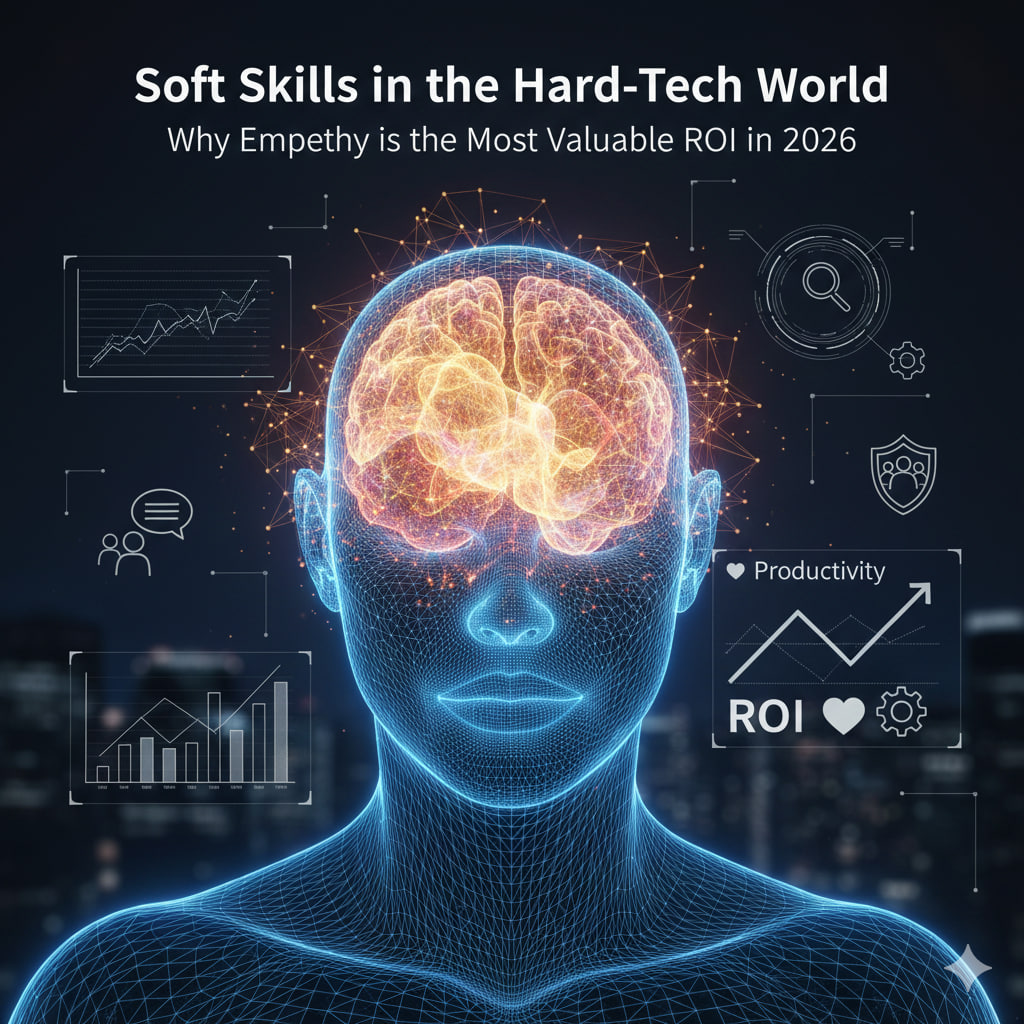
  • Soft Skills in a Hard-Tech World: Why Empathy is the Most Valuable ROI in 2026.

    Soft Skills in a Hard-Tech World: Why Empathy is the Most Valuable ROI in 2026.

    Soft Skills in a Hard-Tech World: Why Empathy is the Most Valuable ROI in 2026

    In 2026, technical proficiency has become a commodity. With AI capable of writing flawless code, generating complex financial models, and managing logistics in seconds, the “hard skills” that once guaranteed a six-figure salary are now the baseline.

    The new premium? Human-to-Human (H2H) intelligence. Specifically, Empathy has transitioned from a “nice-to-have” HR buzzword to the single most important metric for Return on Investment (ROI) in the modern enterprise.


    The Paradox of Automation

    As we automate more of our analytical tasks, the value of the remaining human tasks skyrockets. We call this the Paradox of Automation: The more high-tech our world becomes, the more high-touch our leadership must be.

    In a world of algorithmic decisions, empathy is the “circuit breaker” that prevents systemic bias, preserves company culture, and drives customer loyalty.


    Why Empathy Drives the Bottom Line

    Empathy isn’t just about “being nice”—it is a sophisticated cognitive tool for data gathering and risk management.

    1. Retention and “Brain Drain” Prevention

    In the hybrid-work era, employees are no longer bound by geography. They stay where they feel seen.

    • The ROI: Replacing a high-level employee costs roughly 1.5x to 2x their annual salary. Empathetic leaders reduce turnover by an average of 30%, saving millions in recruitment and lost productivity.

    2. Conflict De-escalation in Virtual Teams

    Digital communication lacks the nuance of body language, leading to frequent “tone-deaf” misunderstandings.

    • The Skill: An empathetic manager can sense “digital friction” (low engagement in Slack, camera-off trends) and intervene before a minor misunderstanding becomes a project-killing conflict.

    3. User-Centric Innovation

    AI can tell you what people are doing, but only empathy can tell you why.

    • The ROI: Empathy allows product teams to map the emotional journey of a user. This insight leads to products that solve actual human frustrations rather than just adding features for the sake of technology.

    The “Empathy Stack”: Developing the Skill

    You can’t “install” empathy, but you can build the neural pathways for it through deliberate practice:

    Skill ComponentBusiness ApplicationDaily Practice
    Active ListeningClient Discovery CallsRepeat back what you heard before responding: “If I understand correctly, you’re feeling… is that right?”
    Perspective ShiftingStakeholder ManagementAsk: “If I were in their position with their specific pressures, why would this proposal be scary to me?”
    Cognitive EmpathyStrategic NegotiationUnderstanding an opponent’s mental state to find “Win-Win” outcomes that AI cannot calculate.

    The 2026 Leadership Shift

    2020 Leadership (Command & Control)2026 Leadership (Connect & Calibrate)
    Focus on “Throughput”Focus on “Psychological Safety”
    Management by MonitoringManagement by Outcomes and Trust
    High EQ is optionalHigh EQ is the primary hiring filter

    “AI can simulate logic perfectly, but it cannot feel the weight of a decision. That weight is the human burden, and empathy is how we carry it together.”

    In the hard-tech world of 2026, the most “technically advanced” thing you can do is be deeply, authentically human.

  • The Fractional Executive: How to Build a High-Income Career Without a Single Boss.

    The Fractional Executive: How to Build a High-Income Career Without a Single Boss.

    The Fractional Executive: How to Build a High-Income Career Without a Single Boss

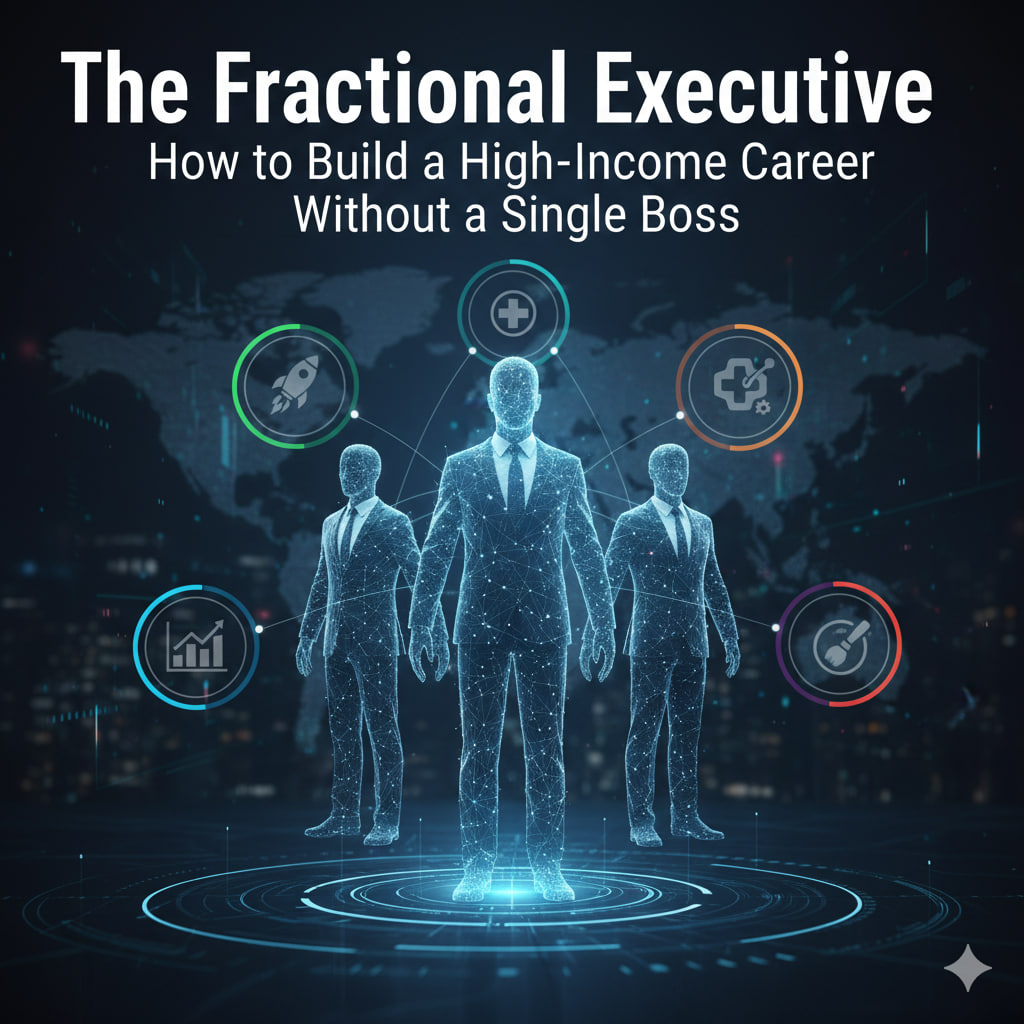
    The traditional “climb to the top” has hit a ceiling. In 2026, the most seasoned professionals are no longer looking for a corner office and a 60-hour work week. Instead, they are becoming Fractional Executives.

    A Fractional Executive is a high-level leader (CFO, CMO, CTO, or COO) who works with multiple companies simultaneously, providing 10%–30% of their time to each. This model allows startups to access elite talent they couldn’t otherwise afford, while giving the executive total autonomy and diversified income.


    The Economic Shift: Why Now?

    The business landscape has moved from “full-time ownership” of talent to “just-in-time” expertise. Companies in 2026 are leaner; they realize they don’t need a $300k/year CMO to sit in every meeting—they need that CMO’s strategic brain for 5 hours a week.


    The Three Pillars of a Fractional Career

    1. Portfolio Income vs. Single-Point Failure

    The biggest risk in 2026 is having one boss. If that company pivots or fails, 100% of your income vanishes. A Fractional Executive typically manages 3 to 5 clients.

    • The Math: Five clients paying $5,000/month equals a $300,000 annual salary.
    • The Security: Losing one client only impacts 20% of your revenue, providing a “built-in” safety net.

    2. The “Expertise Arbitrage”

    As a fractional leader, you aren’t paid for your time; you are paid for your index of solutions. Because you see the inside of five different companies, you can spot patterns and solve problems faster than an in-house executive who only sees one environment. You are essentially “arbitraging” your experience across multiple industries.

    3. Radical Autonomy

    The Fractional Executive owns their “stack.” You choose your tools, your hours, and your location. Most importantly, you avoid the “office politics” of middle management. You are a high-value consultant with a seat at the table, focused strictly on outcomes.


    How to Transition to Fractional Work

    If you have 10+ years of leadership experience, the transition involves three steps:

    StepActionObjective
    The ProductizationDefine your “Value Block.” (e.g., “I scale SaaS sales from $1M to $10M.”)Move from “selling hours” to “selling a specific result.”
    The Network LoopReach out to VCs and Private Equity firms.Position yourself as the person they send in to fix their portfolio companies.
    The Tech StackImplement a robust CRM and time-tracking system.Manage 5 different company cultures without dropping the ball.

    The Challenges (And How to Solve Them)

    • Context Switching: Jumping between a FinTech client and a Healthcare client in the same afternoon can be draining.
      • Solution: Day-Theming. Dedicated Mondays to Client A, Tuesdays to Client B.
    • The “Lonely Leader”: You are no longer “part of the team” in the traditional sense.
      • Solution: Join Fractional Executive communities (like Pavilion or Chief) for peer support and lead sharing.

    “In the old world, power was how many people you managed. In the new world, power is how much of your own time you own.”