Category: Maraki Dropshipping

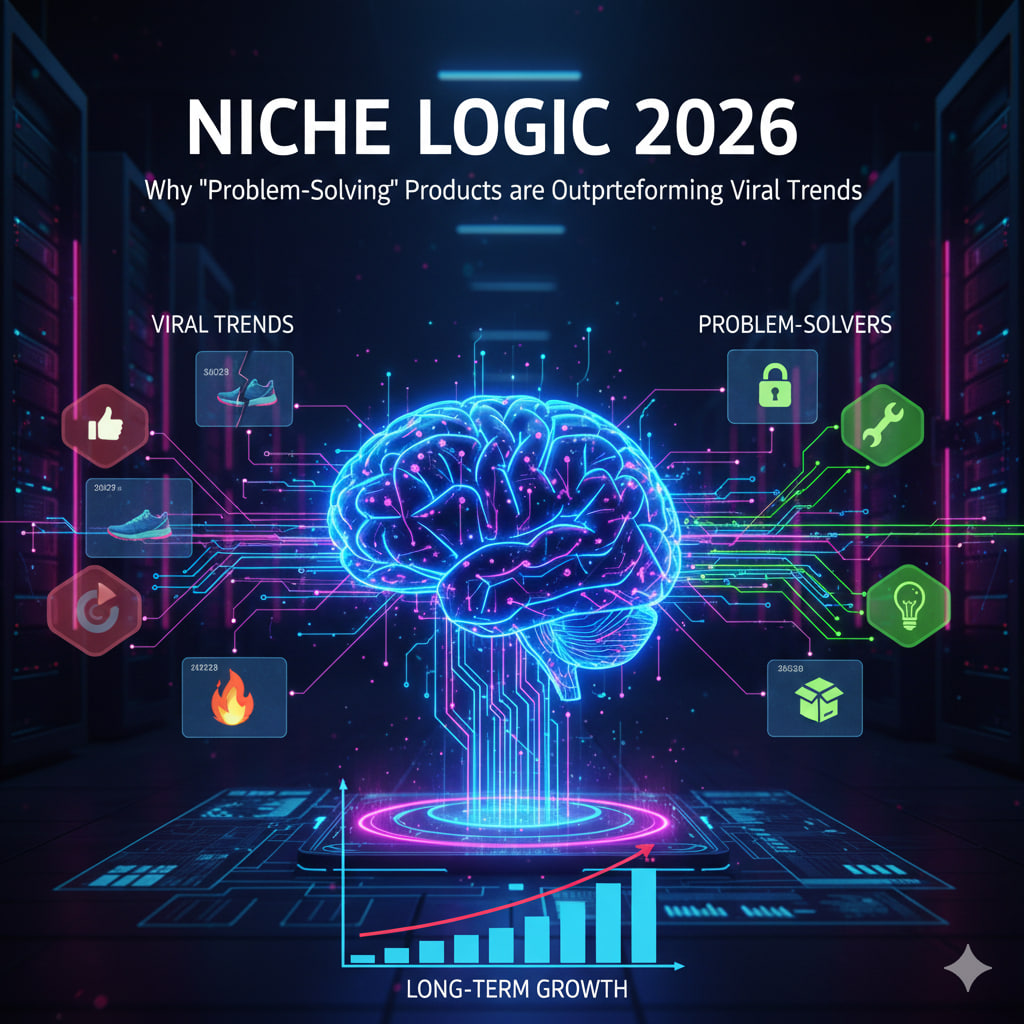
  • Niche Logic 2026 is about building a sustainable business by focusing on products that solve recurring, everyday frustrations. Here is why problem-solvers are winning the long game.

    Niche Logic 2026 is about building a sustainable business by focusing on products that solve recurring, everyday frustrations. Here is why problem-solvers are winning the long game.

    In 2026, the “Gold Rush” of viral impulse buys is being replaced by the “Utility Era.” While viral trends offer a quick spike in sales, they often lead to high return rates and “one-hit wonder” stores.

    Niche Logic 2026 is about building a sustainable business by focusing on products that solve recurring, everyday frustrations. Here is why problem-solvers are winning the long game.


    1. The “Impulse Fatigue” Shift

    By 2026, consumers have become more skeptical of TikTok “must-haves” that end up as clutter. Instead, they are searching for solutions.

    • Viral Trends: Driven by “FOMO” (Fear of Missing Out). These have a shelf life of 3–6 weeks.
    • Problem-Solvers: Driven by “Pain Point Relief.” These have a shelf life of 3–5 years.
    • The Math: Problem-solving products have a 15% lower return rate because the purchase is rooted in logic, not just a dopamine hit.

    2. High-Utility Niches Dominating 2026

    Data from early 2026 shows four specific “utility” sectors outperforming general stores:

    NicheProblem SolvedHero Product Example
    Ergonomic Remote WorkPhysical pain from “WFH” setups.Posture-correcting desk converters.
    Sustainable Home CareWaste and recurring cost of plastics.Modular, refillable cleaning kits.
    Pet Health & SafetyAnxiety about pet well-being.GPS-integrated smart collars.
    Micro-RecoveryMuscle tension and chronic soreness.Portable, percussive heat-therapy pens.

    3. The “Video-to-Value” Marketing Rule

    In 2026, you don’t sell the product; you sell the “Before & After” transformation.

    • The 3-Second Hook: Show the frustration (e.g., a tangled mess of cables).
    • The 5-Second Solution: Show the product in action (e.g., a magnetic cable organizer).
    • The 7-Second Proof: Show the result (e.g., a clean, zen workspace).

    Pro-Tip: AI search engines now prioritize “How-To” and “Review” content. By focusing on a problem-solver, your store will naturally rank for “Intent-Based” searches like “how to fix lower back pain at my desk,” bringing in free, high-intent organic traffic.


    4. Why Logistics Love Problem-Solvers

    Problem-solving products are usually functional, not fashionable.

    1. No Sizing Issues: Unlike apparel, a “smart drain hair catcher” fits every shower. No size charts = fewer returns.
    2. Bundle Potential: If you solve one problem (e.g., messy kitchen drawers), the customer is 40% more likely to buy the “expansion pack” for their pantry.
    3. Subscription Revenue: Many problem-solvers require refills (filters, cleaning pods, etc.), turning a one-time dropshipping customer into a lifetime subscriber.
  • The Death of Slow Shipping: How to Find and Vet Domestic Suppliers for 2-Day Delivery.

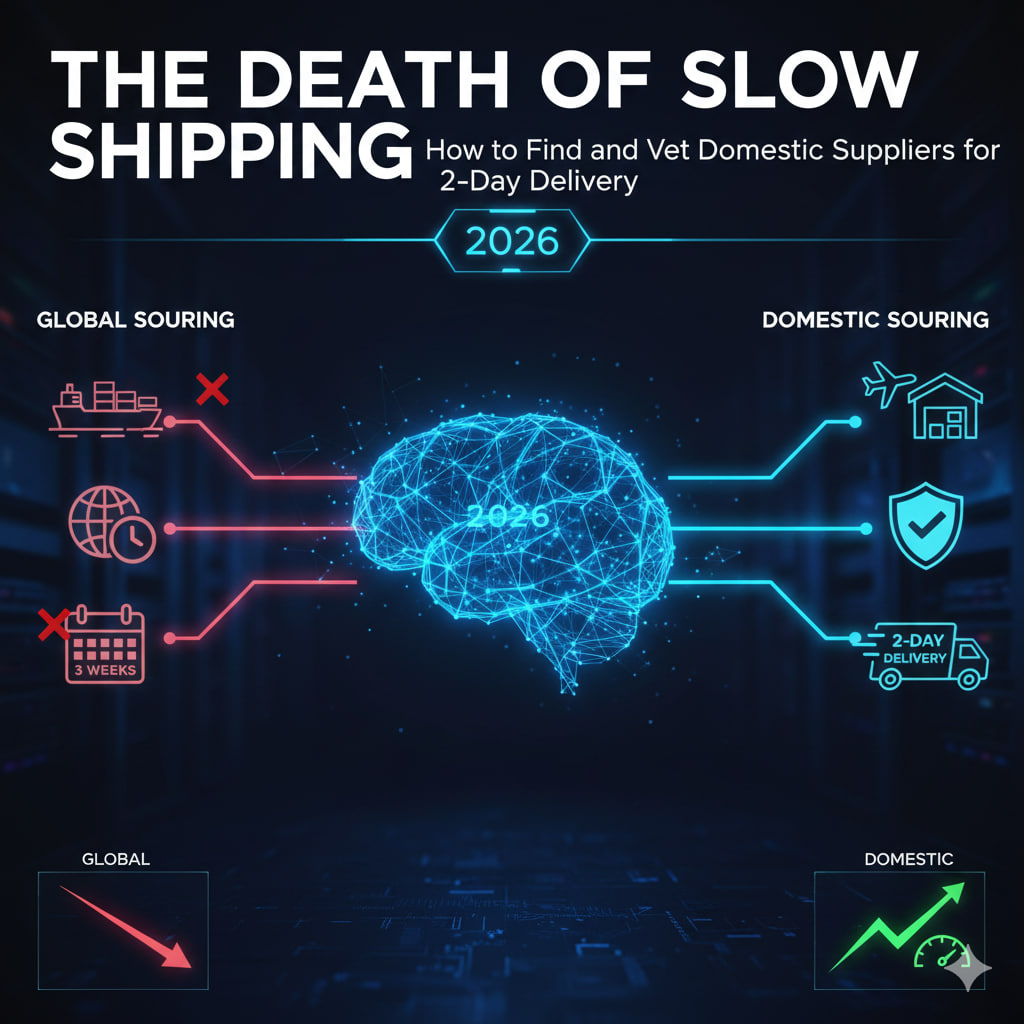
    The Death of Slow Shipping: How to Find and Vet Domestic Suppliers for 2-Day Delivery.

    In 2026, the “standard” 3-week shipping time from overseas is no longer a viable business model for most niches. Amazon Prime has conditioned consumers to expect 2-day delivery, and if you can’t provide it, your “Add to Cart” rate will suffer.

    The solution is Domestic Sourcing—finding suppliers who hold inventory in your customer’s country. Here is your 2026 playbook for finding and vetting these high-speed partners.


    1. The 2026 Domestic Supplier Landscape

    Instead of general marketplaces, look for platforms that prioritize “Ships From” filters.

    PlatformBest For2026 Edge
    SpocketUS/EU Sourcing80% of suppliers are local; allows 2–5 day shipping.
    ZendropAutomation & ScalingOffers “Express” shipping from US-based fulfillment centers.
    SynceeGlobal B2BMassive directory with a “Supplier Location” filter for 1-click local sourcing.
    CJ DropshippingHybrid InventoryLets you pre-order stock to their US/EU warehouses for 2-day domestic fulfillment.

    2. How to “Speed-Vet” a Supplier

    Before you list a product, you must verify the supplier isn’t just a “middleman” pretending to be domestic. Use the “Domestic Credibility Test”:

    • The Address Audit: Use Google Maps to check the supplier’s warehouse address. If it leads to a residential home or a virtual mailbox, they likely don’t hold physical stock.
    • The “24-Hour” Response Rule: Message them at 10 AM local time. If they take 12+ hours to respond, their support team is likely in a different time zone (often a sign of an overseas operation).
    • Tracking ID Verification: Ask for a sample tracking number from a recent domestic order. Check the “Origin” city; it should match their stated warehouse location.

    3. The Vetting Checklist (Must-Have Documents)

    In 2026, high-quality domestic suppliers should be able to provide these four items upon request:

    1. Live Inventory Feed: A link (CSV or API) that updates your store so you don’t sell out-of-stock items.
    2. Real-Time Tracking Integration: Proof that they can automatically sync tracking numbers to your Shopify/Wix store.
    3. Return Policy Agreement: A domestic return address. If they tell you “returns go to China,” they aren’t a true domestic partner.
    4. Branded Invoicing: The ability to include your brand’s logo on the packing slip instead of theirs.

    4. The “Hybrid” Strategy for 2026

    Many successful stores use a 70/30 Hybrid Model:

    • 70% Domestic: Your “Hero Products” (best sellers) are sourced from local warehouses to guarantee 2-day shipping and 5-star reviews.
    • 30% International: New or niche products are tested using overseas suppliers. Once a product proves it can sell 10+ units a day, you move it to a domestic partner.

    Pro-Tip: Highlight “Ships from [Country]” on your product page in bold. In 2026, this one line of text is often more effective at closing a sale than a discount code.

  • The High-Ticket Pivot: A Step-by-Step Guide to Dropshipping Premium Tech & Eco-Goods.

    The High-Ticket Pivot: A Step-by-Step Guide to Dropshipping Premium Tech & Eco-Goods.

    In 2026, the dropshipping world has split. While the “low-ticket” market is a race to the bottom with thin margins and high competition, the High-Ticket Pivot is where the real wealth is being built.

    By selling items priced between $500 and $5,000, you only need a handful of sales to replace a full-time income. In 2026, the “sweet spot” for high-ticket goods lies in the intersection of Premium Tech (Smart Home, Biohacking) and Eco-Goods (Solar, Sustainable Mobility).


    1. The High-Ticket Math

    In low-ticket dropshipping, you might make $5 profit on a $20 item. To make $5,000, you need 1,000 customers. In high-ticket, you sell a $2,500 Professional Espresso Machine or a $3,000 Off-Grid Solar Generator with a 25% margin.

    MetricLow-Ticket StoreHigh-Ticket Store
    Average Order Value$25$1,200
    Profit per Sale$5 – $10$250 – $800
    Monthly Sales for $5k Profit500 – 1,0007 – 20
    Customer Support LoadExtremeMinimal (but high-touch)

    2. Sourcing the 2026 “Value Giants”

    The key is to avoid “no-name” generic tech and instead become an Authorized Dealer for established, mid-tier premium brands.

    • Premium Tech: Look for “Work-from-Home Luxury” (standing desks with built-in AI health sensors) or “Smart Security” (multi-camera solar 4K systems).
    • Eco-Goods: The “Energy Independence” niche is exploding. Focus on Portable Power Stations, Home Wind Turbines, or Electric Micro-Mobility (high-end e-scooters and folding bikes).

    3. Step-by-Step Implementation Guide

    Step 1: The “Trust-First” Store Build

    High-ticket buyers don’t buy from “scammy” looking sites. Your store must look like a high-end boutique.

    • Essential Pages: Comprehensive “About Us,” “Warranty Information,” and “Financing Options” (Shop Pay, Affirm, or Klarna are mandatory in 2026).
    • The “Expert” Signal: Include detailed buying guides (e.g., “The Ultimate Guide to Choosing a Home Solar Array”).

    Step 2: Supplier Outreach (The “Pro” Pitch)

    Don’t use AliExpress. Reach out to brands directly or use platforms like Carro or Syncee.

    • The Pitch: “We are [Store Name], focusing on high-end [Niche]. We spend $[X] monthly on Google Shopping ads and provide 24/7 US-based customer support. We’d like to apply to be an authorized retailer.”

    Step 3: High-Intent Marketing (Google vs. Social)

    Viral TikTok ads rarely sell $2,000 items.

    • Google Shopping Ads: Target users searching for specific models (e.g., “EcoFlow Delta Pro price”). They are ready to buy.
    • Retargeting: Since high-ticket items have a longer “consideration phase” (7–14 days), use Meta ads to show testimonials and “Unboxing” videos to people who visited your site but didn’t buy yet.

    4. The 2026 “Secret Sauce”: White-Glove Support

    When someone spends $3,000, they expect to talk to a human.

    • Live Chat: Have a human (not a bot) available during business hours.
    • Concierge Service: Offer a “Pre-Purchase Consultation” to help them choose the right model. This one-on-one time almost guarantees a conversion.

    Risk Mitigation: Always use Shipping Insurance. In high-ticket, one lost or damaged $4,000 crate can wipe out your monthly profit.