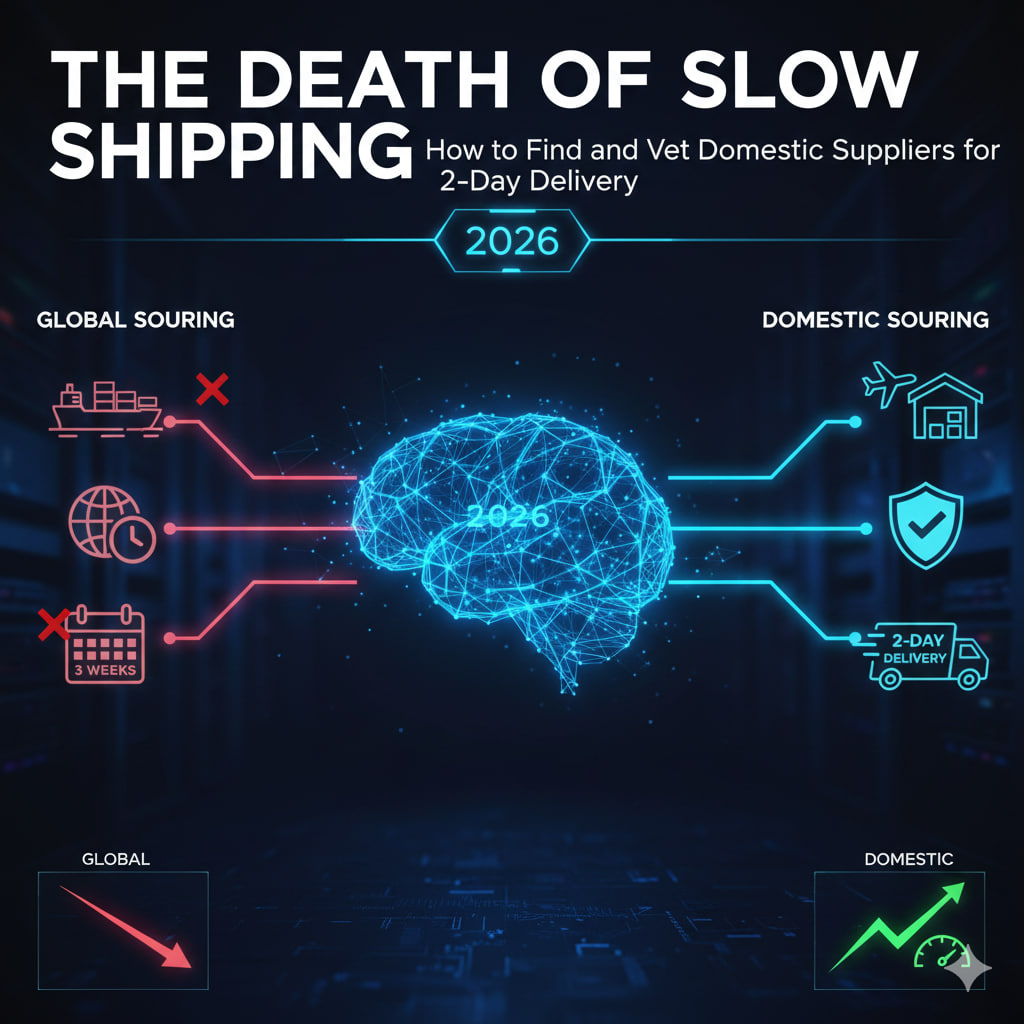
In 2026, the “standard” 3-week shipping time from overseas is no longer a viable business model for most niches. Amazon Prime has conditioned consumers to expect 2-day delivery, and if you can’t provide it, your “Add to Cart” rate will suffer.
The solution is Domestic Sourcing—finding suppliers who hold inventory in your customer’s country. Here is your 2026 playbook for finding and vetting these high-speed partners.
1. The 2026 Domestic Supplier Landscape
Instead of general marketplaces, look for platforms that prioritize “Ships From” filters.
| Platform | Best For | 2026 Edge |
| Spocket | US/EU Sourcing | 80% of suppliers are local; allows 2–5 day shipping. |
| Zendrop | Automation & Scaling | Offers “Express” shipping from US-based fulfillment centers. |
| Syncee | Global B2B | Massive directory with a “Supplier Location” filter for 1-click local sourcing. |
| CJ Dropshipping | Hybrid Inventory | Lets you pre-order stock to their US/EU warehouses for 2-day domestic fulfillment. |
2. How to “Speed-Vet” a Supplier
Before you list a product, you must verify the supplier isn’t just a “middleman” pretending to be domestic. Use the “Domestic Credibility Test”:
- The Address Audit: Use Google Maps to check the supplier’s warehouse address. If it leads to a residential home or a virtual mailbox, they likely don’t hold physical stock.
- The “24-Hour” Response Rule: Message them at 10 AM local time. If they take 12+ hours to respond, their support team is likely in a different time zone (often a sign of an overseas operation).
- Tracking ID Verification: Ask for a sample tracking number from a recent domestic order. Check the “Origin” city; it should match their stated warehouse location.
3. The Vetting Checklist (Must-Have Documents)
In 2026, high-quality domestic suppliers should be able to provide these four items upon request:
- Live Inventory Feed: A link (CSV or API) that updates your store so you don’t sell out-of-stock items.
- Real-Time Tracking Integration: Proof that they can automatically sync tracking numbers to your Shopify/Wix store.
- Return Policy Agreement: A domestic return address. If they tell you “returns go to China,” they aren’t a true domestic partner.
- Branded Invoicing: The ability to include your brand’s logo on the packing slip instead of theirs.
4. The “Hybrid” Strategy for 2026
Many successful stores use a 70/30 Hybrid Model:
- 70% Domestic: Your “Hero Products” (best sellers) are sourced from local warehouses to guarantee 2-day shipping and 5-star reviews.
- 30% International: New or niche products are tested using overseas suppliers. Once a product proves it can sell 10+ units a day, you move it to a domestic partner.
Pro-Tip: Highlight “Ships from [Country]” on your product page in bold. In 2026, this one line of text is often more effective at closing a sale than a discount code.
Leave a Reply