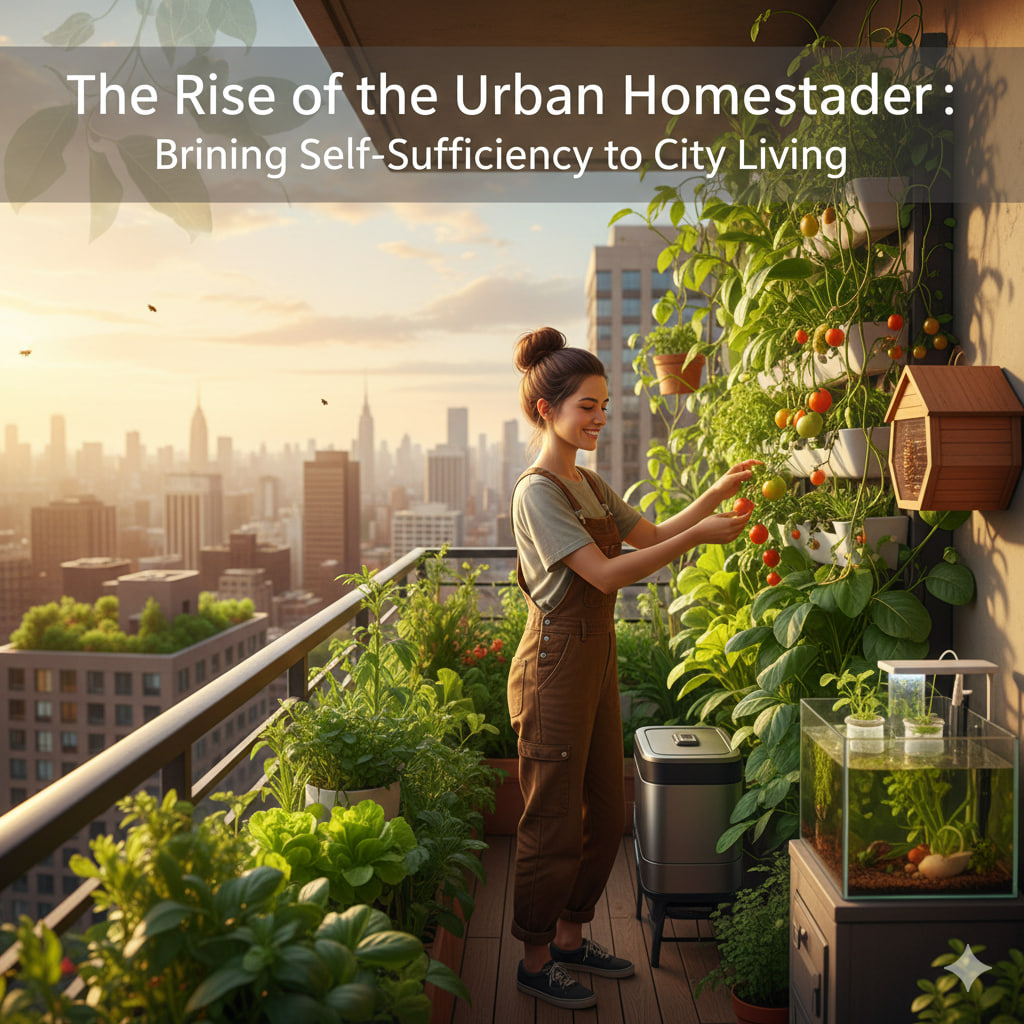
The Rise of the Urban Homesteader: Bringing Self-Sufficiency to City Living
In the early 2020s, “homesteading” conjured images of sprawling rural pastures and remote cabins. Fast forward to 2026, and the movement has moved into the concrete jungle. Driven by climate consciousness, rising food costs, and a desire for tactile connection in a digital world, the Urban Homesteader is redefining what it means to live in a city.
This isn’t just about a few succulents on a windowsill; it’s a radical shift toward localized production and self-reliance within a high-density environment.
The Three Pillars of Urban Self-Sufficiency
1. High-Density Food Production
Urban homesteading maximizes every square inch of space. Modern city dwellers are turning balconies into vertical forests and kitchens into laboratories.
- Hydroponics & Aquaponics: Using nutrient-rich water instead of soil allows for 30% faster growth in half the space.
- Micro-Livestock: In cities where ordinances allow, “balcony bees” for honey and rooftop quail (which are quieter and smaller than chickens) have become common sources of protein and pollinators.
- The “Edible Balcony”: Replacing ornamental flowers with “cut-and-come-again” greens like kale, chard, and herbs.
2. The Circular Kitchen: Waste as Wealth
To an urban homesteader, there is no such thing as “trash.” Everything is a resource for the next cycle.
- Bokashi Fermentation: Traditional composting is difficult in small apartments. Bokashi uses specialized bacteria to “pickle” food waste (including meat and dairy) in airtight bins, creating nutrient-rich tea for plants in weeks without the smell.
- Gray Water Literacy: Reclaiming water from vegetable washing to hydrate the garden, reducing the urban footprint.
3. Radical DIY: Skills over Services
The movement is as much about mindset as it is about physical goods. It’s a rejection of the “disposable” economy.
- Micro-Repair: Instead of replacing electronics or clothing, homesteaders utilize community “Tool Libraries” and AI-guided repair tutorials.
- Preservation: The return of fermentation, pickling, and “small-batch” canning to ensure seasonal food lasts through the year.
The Benefits: More Than Just Free Tomatoes
| Benefit | Impact |
| Biophilia | Regular contact with soil and plants lowers cortisol and improves mental health. |
| Resilience | Reduced dependence on fragile global supply chains for basic needs. |
| Community | The “Seed Swap” culture creates hyper-local social bonds in otherwise anonymous cities. |
How to Start Your Urban Homestead Today
You don’t need an acre; you just need a shelf.
- The Window Silt Start: Begin with herbs (basil, mint, chives). They are high-yield, expensive to buy, and easy to grow.
- The Compost Shift: Get a small counter-top compost bin to start seeing your waste as potential energy.
- The Skill-Up: Commit to making one thing from scratch this week that you normally buy—be it bread, oat milk, or a simple cleaning spray.
The goal of the urban homesteader isn’t to leave the city—it’s to make the city more livable, one balcony at a time.
Leave a Reply