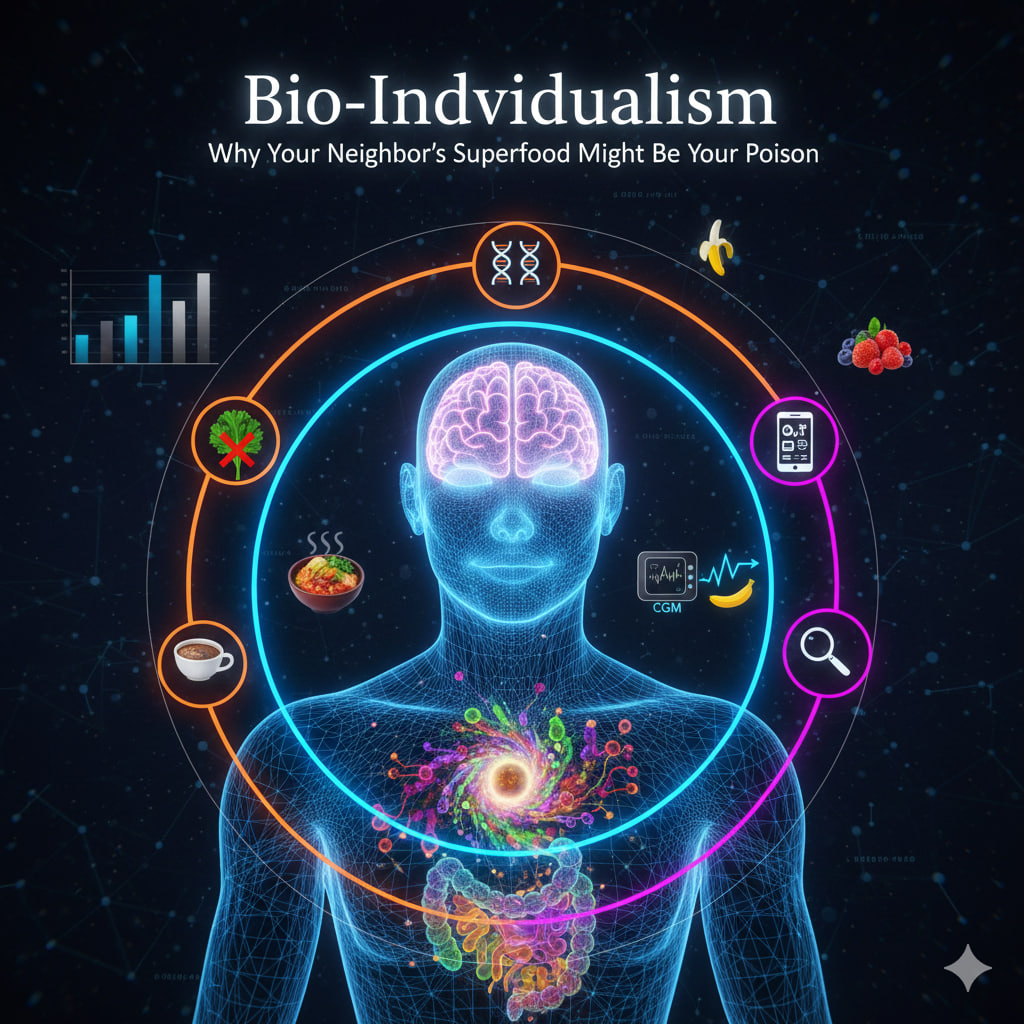
Bio-Individualism: Why Your Neighbor’s Superfood Might Be Your Poison
In the early 2020s, the health world was obsessed with “The Best Diet.” Whether it was Keto, Vegan, or Paleo, the assumption was that if a specific regimen worked for a celebrity or a fitness influencer, it would work for everyone.
By 2026, we’ve realized that the most dangerous health myth is the word “universal.” Enter Bio-Individualism: the clinical understanding that your genetics, gut microbiome, and lifestyle create a unique internal environment where one person’s “superfood” is another person’s metabolic stressor.
The Science of Difference
Why does your best friend thrive on a high-carb plant-based diet while you feel sluggish and bloated? The answer lies in three distinct layers of your biology:
1. The Gut Microbiome
Your gut is home to trillions of bacteria. These microbes are responsible for breaking down fibers and synthesizing vitamins. If you lack the specific bacteria to process lectins (found in beans) or cruciferous vegetables (like kale), these “healthy” foods can trigger systemic inflammation.
2. Glycemic Response
Groundbreaking studies have shown that two people can eat the exact same banana, and one will have a stable blood sugar level while the other experiences a massive spike and crash.
3. Nutrigenomics
Our DNA dictates how we metabolize certain nutrients. For example:
- The “Caffeine Gene” (CYP1A2): Determines if you are a fast or slow metabolizer of caffeine. For some, coffee protects the heart; for others, it increases the risk of hypertension.
- The Vitamin D Receptor: Some people require 5x the standard dose of Vitamin D just to maintain baseline levels due to genetic variations.
Common “Superfood” Culprits
Foods that are objectively healthy but often fail the bio-individual test:
- Spinach & Beets (Oxalates): High in nutrients, but for those prone to kidney stones or joint pain, the high oxalate content can be problematic.
- Kale & Broccoli (Goitrogens): Can interfere with thyroid function in individuals with iodine deficiencies or existing thyroid conditions.
- Fermented Foods (Histamines): While great for gut health, foods like sauerkraut and kombucha can cause headaches or hives in people with histamine intolerance.
How to Map Your Own Bio-Individual Needs
Moving away from “trends” and toward “data” is the key to 2026 wellness. Here is how to build your personal nutritional blueprint:
- Continuous Glucose Monitoring (CGM): Once reserved for diabetics, CGMs are now used by biohackers to see in real-time which foods spike their blood sugar.
- The “Elimination and Reintroduction” Method: The gold standard for identifying sensitivities. Remove common triggers for 21 days and reintroduce them one by one.
- DNA & Microbiome Testing: Modern kits provide a list of “avoid” and “super” foods based on your actual biological markers rather than a generic pyramid.
The Shift: From “Perfect” to “Personal”
| The Old Way (Universalism) | The New Way (Bio-Individualism) |
| “Is this food healthy?” | “Is this food healthy for me?” |
| Counting calories for weight loss. | Managing insulin response for metabolic health. |
| Following a diet “name” (e.g., Paleo). | Following a biological feedback loop. |
The Takeaway: Stop apologizing for the “healthy” foods you hate or that make you feel bad. Your body is a sophisticated feedback machine—it’s time you started listening to its specific frequency.
Leave a Reply