Blog

  • From Hierarchy to Holacracy: Are Traditional Management Structures Finally Dead?

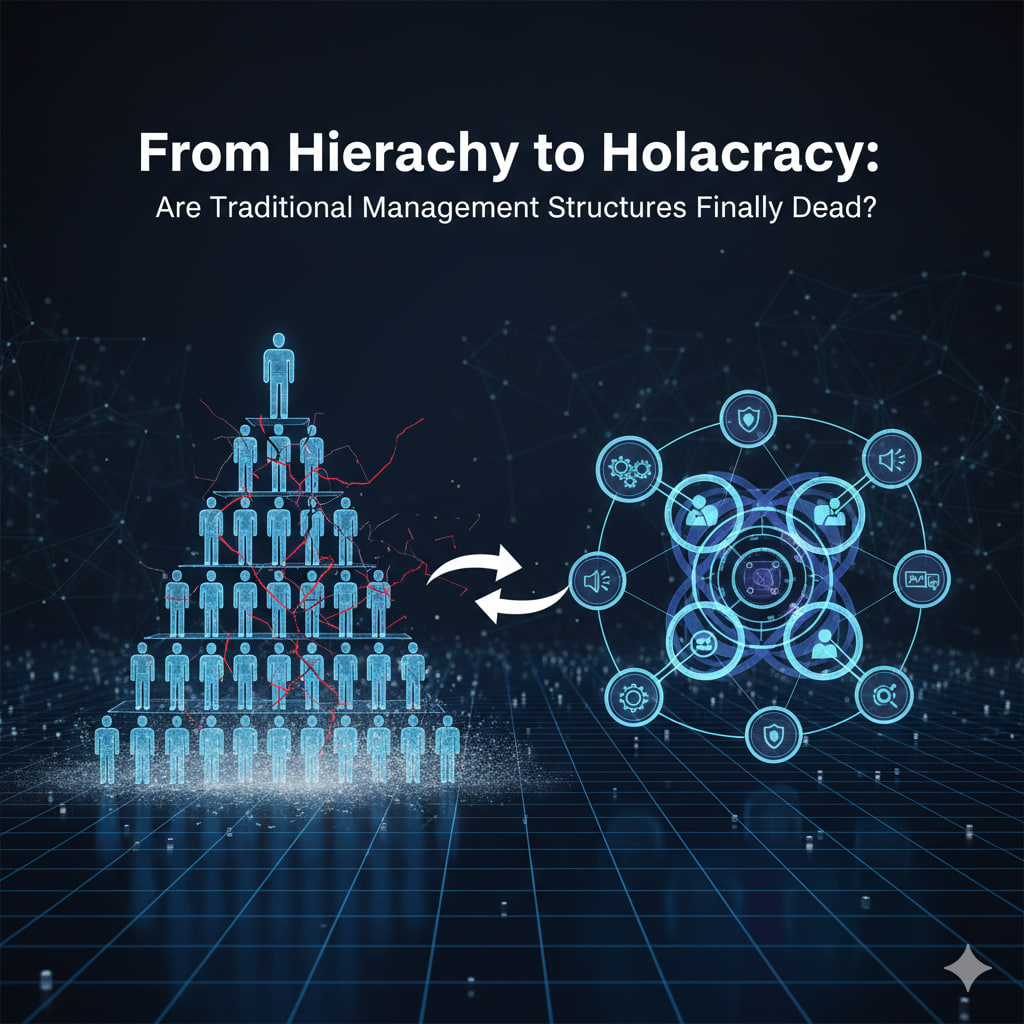
    From Hierarchy to Holacracy: Are Traditional Management Structures Finally Dead?

    From Hierarchy to Holacracy: Are Traditional Management Structures Finally Dead?

    The corporate “pyramid” has been the gold standard of business since the Industrial Revolution. It was designed for a world of slow information and manual labor, where a few “thinkers” at the top directed many “doers” at the bottom.

    But in 2026, the pyramid is crumbling. In a high-velocity, AI-driven economy, the time it takes for a decision to travel from the front lines to the C-suite and back again is a death sentence for innovation. Companies are now pivoting toward Holacracy and self-organizing systems.


    The Fundamental Shift: Power vs. Purpose

    Traditional management is built on Hierarchy, where authority is tied to a person’s title. Holacracy, by contrast, ties authority to roles.

    • Hierarchy: You report to a boss. If you want to change a process, you need permission.
    • Holacracy: You “energize” a role. Within that role, you have total autonomy to make decisions that serve the company’s purpose. There are no “managers,” only “Lead Links” who coordinate between circles.


    Why 2026 is the Tipping Point

    Three factors have made traditional structures obsolete in the current market:

    1. The Speed of AI Integration

    When a team member identifies an AI tool that can automate 40% of their workflow, they shouldn’t have to wait for a quarterly budget review to implement it. Holacracy allows for distributed authority, meaning the people closest to the work make the tools-based decisions.

    2. The “Permission-less” Workforce

    Top talent in 2026—specifically Gen Z and Alpha—rejects the “wait-your-turn” mentality of old hierarchies. They seek Agency. Companies that use holacracy see a 40% increase in engagement because employees feel like owners of their specific domain.

    3. Resilience over Robustness

    A pyramid is “robust”—it’s hard to knock down, but it’s rigid. A holacratic system of “circles” is resilient. If one circle (department) fails, the rest of the organization can reorganize and adapt instantly without waiting for a directive from the top.


    The Challenges: It’s Not All Sunshine

    If Holacracy is so great, why hasn’t everyone switched? Because structure is easy, but culture is hard.

    ChallengeThe Reality
    Hidden Power DynamicsEven without titles, “natural leaders” emerge, which can create confusion if not managed.
    Meeting OverloadHolacracy requires frequent “Governance Meetings” to define roles, which can feel bureaucratic at first.
    Accountability GapsWithout a “boss” to point the finger at, some employees feel lost or unmotivated.

    Is the Hierarchy Actually Dead?

    Not entirely. We are seeing the birth of the “Hybrid Structure.” Most successful firms in 2026 keep a thin layer of traditional hierarchy for high-level fiduciary and legal responsibility, but operate their daily projects through Self-Organizing Circles. They have realized that while you need a “Captain” for the ship’s overall direction, you don’t need a Captain to tell the engineers how to fix the engine in real-time.

    “The manager of the future isn’t a supervisor; they are a platform designer. They create the environment where self-management can happen.”
  • Soft Skills in a Hard-Tech World: Why Empathy is the Most Valuable ROI in 2026.

    Soft Skills in a Hard-Tech World: Why Empathy is the Most Valuable ROI in 2026.

    Soft Skills in a Hard-Tech World: Why Empathy is the Most Valuable ROI in 2026

    In 2026, technical proficiency has become a commodity. With AI capable of writing flawless code, generating complex financial models, and managing logistics in seconds, the “hard skills” that once guaranteed a six-figure salary are now the baseline.

    The new premium? Human-to-Human (H2H) intelligence. Specifically, Empathy has transitioned from a “nice-to-have” HR buzzword to the single most important metric for Return on Investment (ROI) in the modern enterprise.


    The Paradox of Automation

    As we automate more of our analytical tasks, the value of the remaining human tasks skyrockets. We call this the Paradox of Automation: The more high-tech our world becomes, the more high-touch our leadership must be.

    In a world of algorithmic decisions, empathy is the “circuit breaker” that prevents systemic bias, preserves company culture, and drives customer loyalty.


    Why Empathy Drives the Bottom Line

    Empathy isn’t just about “being nice”—it is a sophisticated cognitive tool for data gathering and risk management.

    1. Retention and “Brain Drain” Prevention

    In the hybrid-work era, employees are no longer bound by geography. They stay where they feel seen.

    • The ROI: Replacing a high-level employee costs roughly 1.5x to 2x their annual salary. Empathetic leaders reduce turnover by an average of 30%, saving millions in recruitment and lost productivity.

    2. Conflict De-escalation in Virtual Teams

    Digital communication lacks the nuance of body language, leading to frequent “tone-deaf” misunderstandings.

    • The Skill: An empathetic manager can sense “digital friction” (low engagement in Slack, camera-off trends) and intervene before a minor misunderstanding becomes a project-killing conflict.

    3. User-Centric Innovation

    AI can tell you what people are doing, but only empathy can tell you why.

    • The ROI: Empathy allows product teams to map the emotional journey of a user. This insight leads to products that solve actual human frustrations rather than just adding features for the sake of technology.

    The “Empathy Stack”: Developing the Skill

    You can’t “install” empathy, but you can build the neural pathways for it through deliberate practice:

    Skill ComponentBusiness ApplicationDaily Practice
    Active ListeningClient Discovery CallsRepeat back what you heard before responding: “If I understand correctly, you’re feeling… is that right?”
    Perspective ShiftingStakeholder ManagementAsk: “If I were in their position with their specific pressures, why would this proposal be scary to me?”
    Cognitive EmpathyStrategic NegotiationUnderstanding an opponent’s mental state to find “Win-Win” outcomes that AI cannot calculate.

    The 2026 Leadership Shift

    2020 Leadership (Command & Control)2026 Leadership (Connect & Calibrate)
    Focus on “Throughput”Focus on “Psychological Safety”
    Management by MonitoringManagement by Outcomes and Trust
    High EQ is optionalHigh EQ is the primary hiring filter

    “AI can simulate logic perfectly, but it cannot feel the weight of a decision. That weight is the human burden, and empathy is how we carry it together.”

    In the hard-tech world of 2026, the most “technically advanced” thing you can do is be deeply, authentically human.

  • The Fractional Executive: How to Build a High-Income Career Without a Single Boss.

    The Fractional Executive: How to Build a High-Income Career Without a Single Boss.

    The Fractional Executive: How to Build a High-Income Career Without a Single Boss

    The traditional “climb to the top” has hit a ceiling. In 2026, the most seasoned professionals are no longer looking for a corner office and a 60-hour work week. Instead, they are becoming Fractional Executives.

    A Fractional Executive is a high-level leader (CFO, CMO, CTO, or COO) who works with multiple companies simultaneously, providing 10%–30% of their time to each. This model allows startups to access elite talent they couldn’t otherwise afford, while giving the executive total autonomy and diversified income.


    The Economic Shift: Why Now?

    The business landscape has moved from “full-time ownership” of talent to “just-in-time” expertise. Companies in 2026 are leaner; they realize they don’t need a $300k/year CMO to sit in every meeting—they need that CMO’s strategic brain for 5 hours a week.


    The Three Pillars of a Fractional Career

    1. Portfolio Income vs. Single-Point Failure

    The biggest risk in 2026 is having one boss. If that company pivots or fails, 100% of your income vanishes. A Fractional Executive typically manages 3 to 5 clients.

    • The Math: Five clients paying $5,000/month equals a $300,000 annual salary.
    • The Security: Losing one client only impacts 20% of your revenue, providing a “built-in” safety net.

    2. The “Expertise Arbitrage”

    As a fractional leader, you aren’t paid for your time; you are paid for your index of solutions. Because you see the inside of five different companies, you can spot patterns and solve problems faster than an in-house executive who only sees one environment. You are essentially “arbitraging” your experience across multiple industries.

    3. Radical Autonomy

    The Fractional Executive owns their “stack.” You choose your tools, your hours, and your location. Most importantly, you avoid the “office politics” of middle management. You are a high-value consultant with a seat at the table, focused strictly on outcomes.


    How to Transition to Fractional Work

    If you have 10+ years of leadership experience, the transition involves three steps:

    StepActionObjective
    The ProductizationDefine your “Value Block.” (e.g., “I scale SaaS sales from $1M to $10M.”)Move from “selling hours” to “selling a specific result.”
    The Network LoopReach out to VCs and Private Equity firms.Position yourself as the person they send in to fix their portfolio companies.
    The Tech StackImplement a robust CRM and time-tracking system.Manage 5 different company cultures without dropping the ball.

    The Challenges (And How to Solve Them)

    • Context Switching: Jumping between a FinTech client and a Healthcare client in the same afternoon can be draining.
      • Solution: Day-Theming. Dedicated Mondays to Client A, Tuesdays to Client B.
    • The “Lonely Leader”: You are no longer “part of the team” in the traditional sense.
      • Solution: Join Fractional Executive communities (like Pavilion or Chief) for peer support and lead sharing.

    “In the old world, power was how many people you managed. In the new world, power is how much of your own time you own.”

  • The Art of the “Digital Sabbath”: Reclaiming Your Attention in a Hyper-Connected World.

    The Art of the “Digital Sabbath”: Reclaiming Your Attention in a Hyper-Connected World.

    The Art of the “Digital Sabbath”: Reclaiming Your Attention in a Hyper-Connected World

    In 2026, the average person is bombarded by over 6,000 digital signals a day. We have become a society of “fragmented attention,” where the constant ping of notifications has rewired our brains to expect—and eventually crave—distraction.

    The most successful people of the late 2020s are no longer those who can process the most information, but those who can opt out of it. This is the Digital Sabbath: a deliberate, 24-hour period of total disconnection designed to let your nervous system return to its baseline.


    The Problem: The “Always-On” Cortisol Loop

    When we are constantly connected, our brains remain in a state of High-Beta Brainwave activity—the state of active processing and stress. This prevents us from entering the Alpha and Theta states necessary for creativity, deep reflection, and emotional processing. Without a break, we experience “Digital Burnout,” characterized by:

    • Decision Fatigue: Making small choices (like what to click) drains the energy needed for big life decisions.
    • Phantom Vibrations: The sensation of your phone buzzing when it isn’t even in your pocket.
    • Comparison Trap: The subconscious drain of witnessing everyone else’s highlight reels.

    How to Practice the Digital Sabbath

    A Digital Sabbath is not a punishment; it is a luxury. To succeed, you must set clear boundaries.

    1. The Sunset-to-Sunset Rule

    The most effective Sabbath follows the ancient tradition of starting at sundown on Friday and ending at sundown on Saturday (or any 24-hour window that fits your schedule). This allows you to wake up on your day off without the immediate urge to “check in.”

    2. The “Analog Toolkit”

    You cannot simply sit in a dark room. You must replace digital consumption with analog production.

    • Physical Books: Trade the backlit screen for paper to engage your tactile senses.
    • Manual Hobbies: Gardening, cooking without a YouTube tutorial, or painting.
    • Paper Maps: If you’re traveling, try navigating without GPS to engage your spatial awareness.

    3. The Notification “Auto-Responder”

    The biggest barrier to a Sabbath is the fear of being “unreachable.”

    • The Ritual: Set a status on your messaging apps: “Practicing my Digital Sabbath. For emergencies, call [Landline/Partner’s Phone]. See you tomorrow.” This removes the guilt of the unreturned text.

    The Biological Benefits of Disconnecting

    BenefitHow it Happens
    Dopamine ResetBy removing the “variable rewards” of social media, your brain regains its sensitivity to simple pleasures.
    Deep SleepThe absence of blue light and “anticipatory stress” leads to a 20% increase in REM sleep quality.
    Enhanced FocusYour “attention muscle” heals, allowing for longer “Deep Work” sessions during the week.

    The “Micro-Sabbath” (If 24 Hours is Too Much)

    If a full day feels impossible, start with The 3-3-3 Rule:

    • 3 Hours after waking up: No screens.
    • 3 Blocks of 30 minutes: Airplane mode during the workday.
    • 3 Hours before bed: No digital input.

    “Your mind is a garden. It cannot grow if you are constantly stomping on the soil with new information.”

    The Digital Sabbath is the ultimate act of rebellion in 2026. It is the realization that being “reachable” is not a virtue, and being “busy” is not a status symbol.

  • Bio-Individualism: Why Your Neighbor’s Superfood Might Be Your Poison.

    Bio-Individualism: Why Your Neighbor’s Superfood Might Be Your Poison.

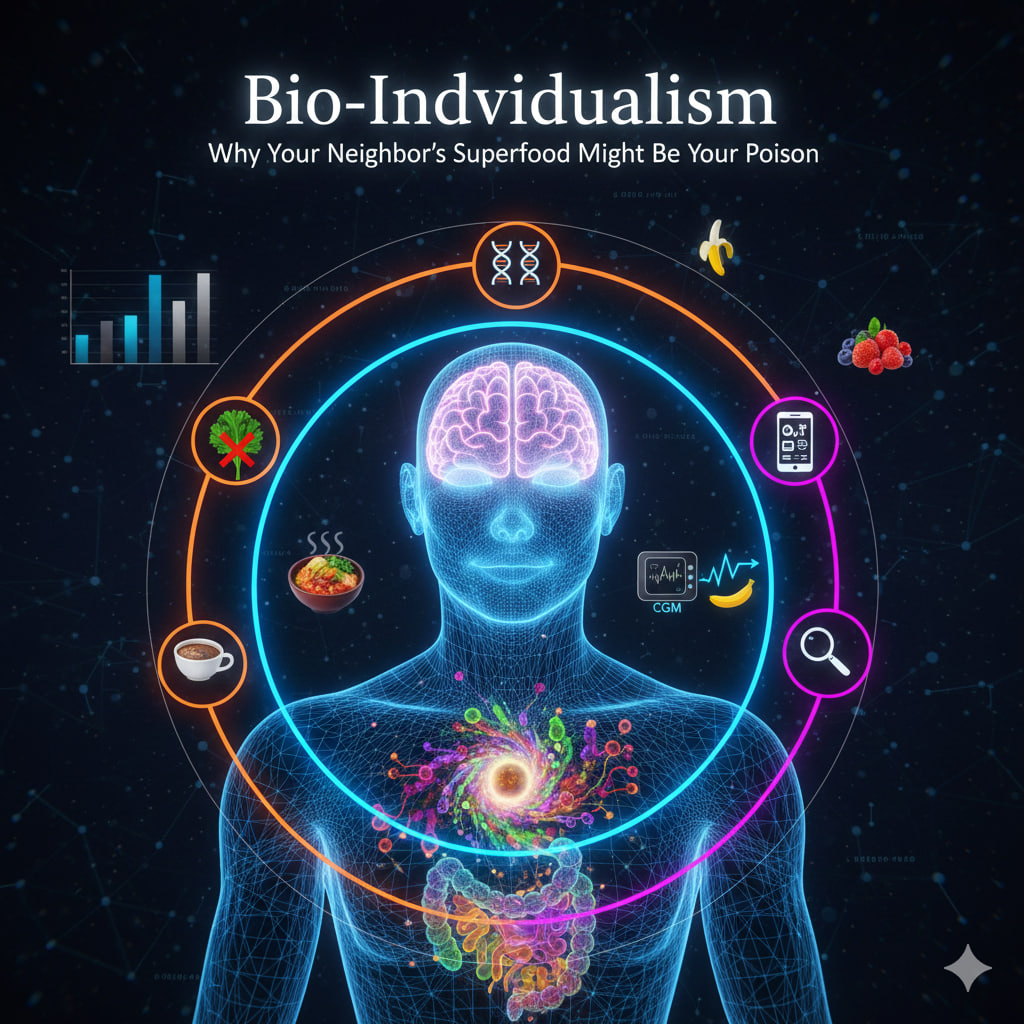
    Bio-Individualism: Why Your Neighbor’s Superfood Might Be Your Poison

    In the early 2020s, the health world was obsessed with “The Best Diet.” Whether it was Keto, Vegan, or Paleo, the assumption was that if a specific regimen worked for a celebrity or a fitness influencer, it would work for everyone.

    By 2026, we’ve realized that the most dangerous health myth is the word “universal.” Enter Bio-Individualism: the clinical understanding that your genetics, gut microbiome, and lifestyle create a unique internal environment where one person’s “superfood” is another person’s metabolic stressor.


    The Science of Difference

    Why does your best friend thrive on a high-carb plant-based diet while you feel sluggish and bloated? The answer lies in three distinct layers of your biology:

    1. The Gut Microbiome

    Your gut is home to trillions of bacteria. These microbes are responsible for breaking down fibers and synthesizing vitamins. If you lack the specific bacteria to process lectins (found in beans) or cruciferous vegetables (like kale), these “healthy” foods can trigger systemic inflammation.

    2. Glycemic Response

    Groundbreaking studies have shown that two people can eat the exact same banana, and one will have a stable blood sugar level while the other experiences a massive spike and crash.

    3. Nutrigenomics

    Our DNA dictates how we metabolize certain nutrients. For example:

    • The “Caffeine Gene” (CYP1A2): Determines if you are a fast or slow metabolizer of caffeine. For some, coffee protects the heart; for others, it increases the risk of hypertension.

    • The Vitamin D Receptor: Some people require 5x the standard dose of Vitamin D just to maintain baseline levels due to genetic variations.

    Common “Superfood” Culprits

    Foods that are objectively healthy but often fail the bio-individual test:

    • Spinach & Beets (Oxalates): High in nutrients, but for those prone to kidney stones or joint pain, the high oxalate content can be problematic.
    • Kale & Broccoli (Goitrogens): Can interfere with thyroid function in individuals with iodine deficiencies or existing thyroid conditions.
    • Fermented Foods (Histamines): While great for gut health, foods like sauerkraut and kombucha can cause headaches or hives in people with histamine intolerance.

    How to Map Your Own Bio-Individual Needs

    Moving away from “trends” and toward “data” is the key to 2026 wellness. Here is how to build your personal nutritional blueprint:

    1. Continuous Glucose Monitoring (CGM): Once reserved for diabetics, CGMs are now used by biohackers to see in real-time which foods spike their blood sugar.
    2. The “Elimination and Reintroduction” Method: The gold standard for identifying sensitivities. Remove common triggers for 21 days and reintroduce them one by one.
    3. DNA & Microbiome Testing: Modern kits provide a list of “avoid” and “super” foods based on your actual biological markers rather than a generic pyramid.

    The Shift: From “Perfect” to “Personal”

    The Old Way (Universalism)The New Way (Bio-Individualism)
    “Is this food healthy?”“Is this food healthy for me?”
    Counting calories for weight loss.Managing insulin response for metabolic health.
    Following a diet “name” (e.g., Paleo).Following a biological feedback loop.

    The Takeaway: Stop apologizing for the “healthy” foods you hate or that make you feel bad. Your body is a sophisticated feedback machine—it’s time you started listening to its specific frequency.

  • The Rise of the Urban Homesteader: Bringing Self-Sufficiency to City Living.

    The Rise of the Urban Homesteader: Bringing Self-Sufficiency to City Living.

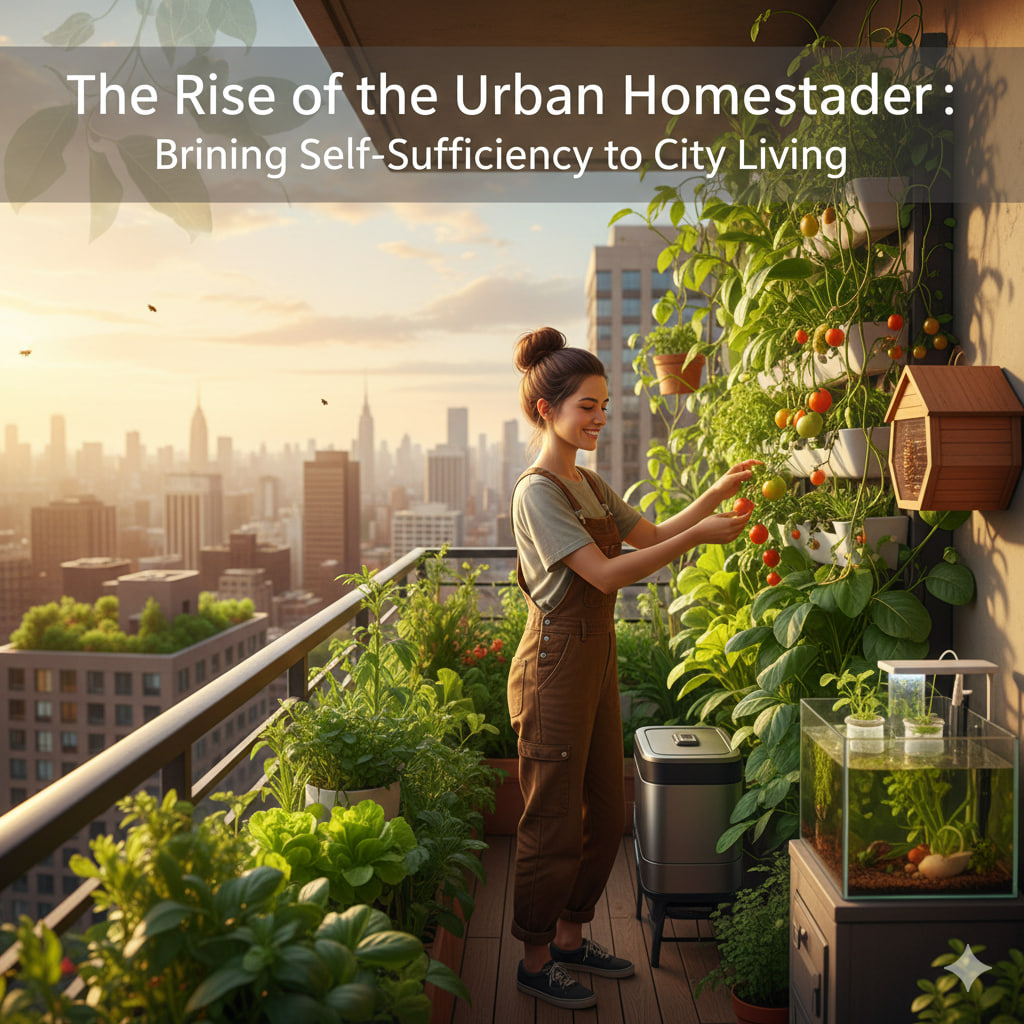
    The Rise of the Urban Homesteader: Bringing Self-Sufficiency to City Living

    In the early 2020s, “homesteading” conjured images of sprawling rural pastures and remote cabins. Fast forward to 2026, and the movement has moved into the concrete jungle. Driven by climate consciousness, rising food costs, and a desire for tactile connection in a digital world, the Urban Homesteader is redefining what it means to live in a city.

    This isn’t just about a few succulents on a windowsill; it’s a radical shift toward localized production and self-reliance within a high-density environment.


    The Three Pillars of Urban Self-Sufficiency

    1. High-Density Food Production

    Urban homesteading maximizes every square inch of space. Modern city dwellers are turning balconies into vertical forests and kitchens into laboratories.

    • Hydroponics & Aquaponics: Using nutrient-rich water instead of soil allows for 30% faster growth in half the space.
    • Micro-Livestock: In cities where ordinances allow, “balcony bees” for honey and rooftop quail (which are quieter and smaller than chickens) have become common sources of protein and pollinators.
    • The “Edible Balcony”: Replacing ornamental flowers with “cut-and-come-again” greens like kale, chard, and herbs.

    2. The Circular Kitchen: Waste as Wealth

    To an urban homesteader, there is no such thing as “trash.” Everything is a resource for the next cycle.

    • Bokashi Fermentation: Traditional composting is difficult in small apartments. Bokashi uses specialized bacteria to “pickle” food waste (including meat and dairy) in airtight bins, creating nutrient-rich tea for plants in weeks without the smell.
    • Gray Water Literacy: Reclaiming water from vegetable washing to hydrate the garden, reducing the urban footprint.

    3. Radical DIY: Skills over Services

    The movement is as much about mindset as it is about physical goods. It’s a rejection of the “disposable” economy.

    • Micro-Repair: Instead of replacing electronics or clothing, homesteaders utilize community “Tool Libraries” and AI-guided repair tutorials.
    • Preservation: The return of fermentation, pickling, and “small-batch” canning to ensure seasonal food lasts through the year.

    The Benefits: More Than Just Free Tomatoes

    BenefitImpact
    BiophiliaRegular contact with soil and plants lowers cortisol and improves mental health.
    ResilienceReduced dependence on fragile global supply chains for basic needs.
    CommunityThe “Seed Swap” culture creates hyper-local social bonds in otherwise anonymous cities.

    How to Start Your Urban Homestead Today

    You don’t need an acre; you just need a shelf.

    1. The Window Silt Start: Begin with herbs (basil, mint, chives). They are high-yield, expensive to buy, and easy to grow.
    2. The Compost Shift: Get a small counter-top compost bin to start seeing your waste as potential energy.
    3. The Skill-Up: Commit to making one thing from scratch this week that you normally buy—be it bread, oat milk, or a simple cleaning spray.

    The goal of the urban homesteader isn’t to leave the city—it’s to make the city more livable, one balcony at a time.

  • Micro-Habits for Macro-Change: 5-Minute Rituals that Rewire Your Day.

    Micro-Habits for Macro-Change: 5-Minute Rituals that Rewire Your Day.

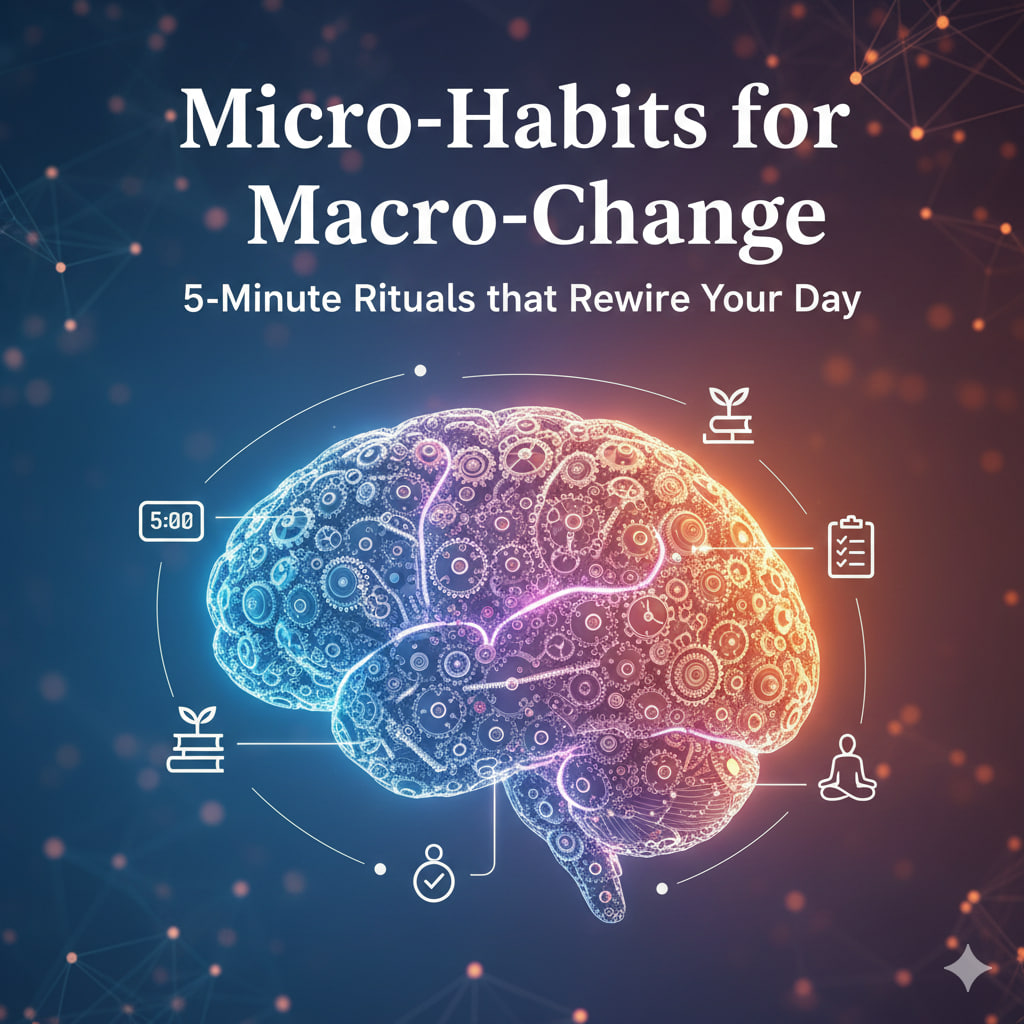
    Micro-Habits for Macro-Change: 5-Minute Rituals that Rewire Your Day

    The biggest mistake we make in self-improvement is thinking that radical change requires radical action. We wait for a “burst of motivation” to overhaul our entire lives, only to burn out by Tuesday.

    In 2026, the science of Micro-Habits has proven that consistency beats intensity every time. By leveraging 5-minute rituals, you bypass the brain’s resistance to change (the amygdala’s fear response) and build neural pathways through repetition rather than willpower.


    The Science: Why 5 Minutes Works

    Our brains are wired for energy efficiency. A “one-hour workout” sounds like a massive energy drain, so the brain creates “friction” to stop you. A “5-minute stretch” is beneath the threshold of alarm. Once you start, you overcome static friction, making it infinitely easier to continue.


    Four Rituals to Rewire Your Day

    1. The “Power of 10” Morning Review (5 Mins)

    Before you check your email or social media, identify your One Big Thing (OBT).

    • The Ritual: Write down 10 small tasks, but circle only one that would make the day a success even if nothing else gets done.
    • The Result: You transition from reactive (answering others) to proactive (pursuing your goals).

    2. Habit Stacking: The “Transition Breath” (2 Mins)

    We often carry the stress of one meeting into the next. Use Habit Stacking—attaching a new habit to an existing one.

    • The Ritual: Every time you close a laptop lid or walk through a doorway, take three “box breaths” (inhale for 4, hold for 4, exhale for 4, hold for 4).
    • The Result: It flushes cortisol and resets your nervous system before the next task begins.

    3. The “Digital Sunset” Prep (5 Mins)

    Sleep quality is determined by the hour before bed.

    • The Ritual: Spend five minutes physically moving your phone to a charging station in a different room and dimming the lights in your main living space.
    • The Result: This triggers the natural release of melatonin, ensuring your “Architecture of Rest” (as we discussed) is optimized.

    4. The 2-Minute Tidy (2 Mins)

    Physical clutter creates mental load.

    • The Ritual: Set a timer for 120 seconds and clear your immediate workspace. Do not organize—just clear.
    • The Result: A clean visual field reduces the “background noise” in your brain, increasing focus for your next deep-work session.

    The Micro-Habit Tracker

    RitualTime RequiredBest For
    OBT Selection5 MinsPrioritization & Clarity
    Box Breathing2 MinsStress Management
    Environment Reset2 MinsFocus & Concentration
    Gratitude Journal3 MinsNeural Rewiring for Positivity

    The Golden Rule: Never Miss Twice

    The goal of a micro-habit isn’t perfection; it’s identity. On days when you are exhausted, do a “scaled-back” version. If you can’t do 5 minutes of yoga, do one stretch. The act of showing up preserves the habit.

    “We are what we repeatedly do. Excellence, then, is not an act, but a habit.” — Will Durant

  • The Architecture of Rest: Why “Passive Recovery” is the New Productivity.

    The Architecture of Rest: Why “Passive Recovery” is the New Productivity.

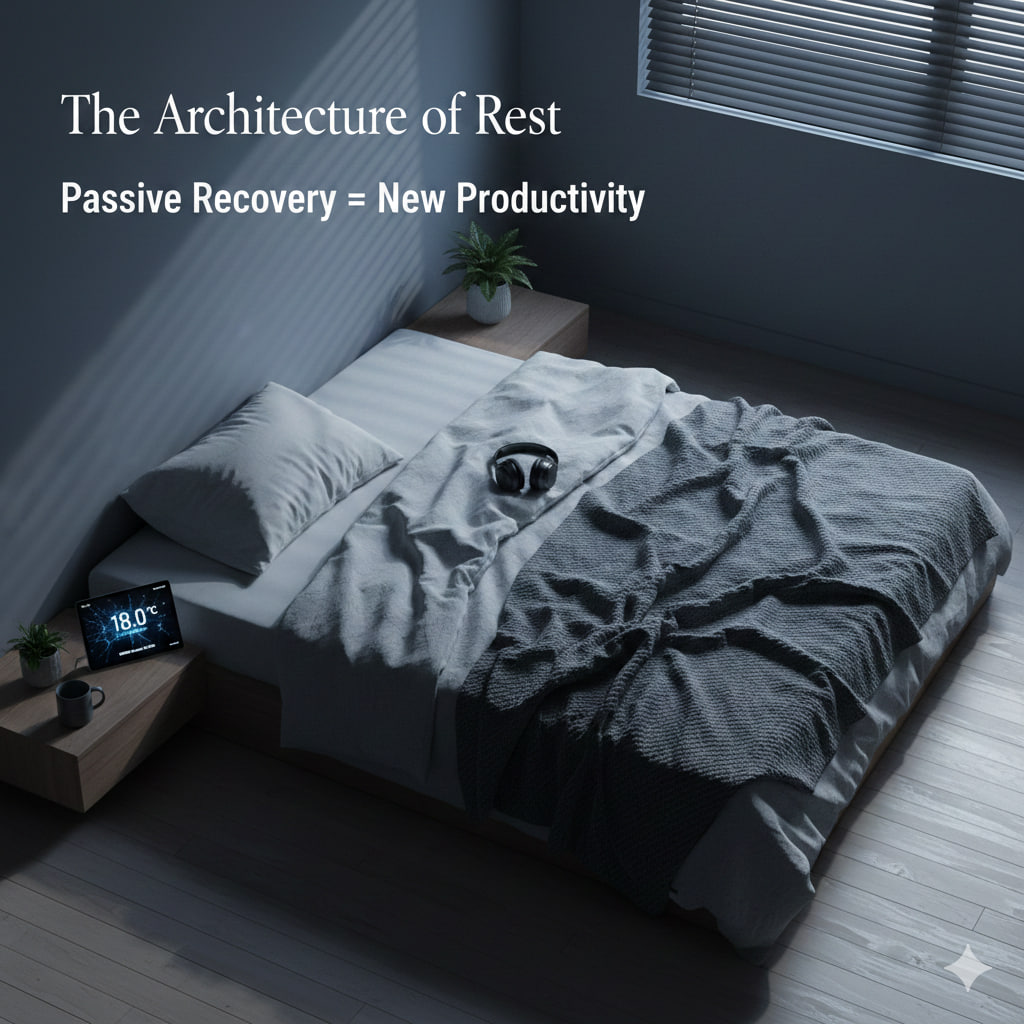
    The Architecture of Rest: Why “Passive Recovery” is the New Productivity

    For decades, we’ve been sold a lie: that the only way to achieve more is to do more. We’ve glamorized the “grind,” turned caffeine into a food group, and treated sleep as a luxury for the unmotivated.

    But in 2026, the data is in, and the verdict is clear. High performance isn’t built in the gym or the boardroom—it’s built during Passive Recovery. We are shifting away from “active” stress management (which often feels like just another to-do item) toward a structured architecture of rest.


    What is Passive Recovery?

    Unlike active recovery (like light jogging or yoga), Passive Recovery requires total stillness. It is the physiological equivalent of hitting the “save” button on your progress. It’s the time when your nervous system switches from Sympathetic (fight or flight) to Parasympathetic (rest and digest).

    • Physical Level: It’s when protein synthesis repairs muscle tissue and the lymphatic system flushes metabolic waste.
    • Cognitive Level: It’s when the brain’s glymphatic system clears out beta-amyloid plaques—essentially “washing” your brain while you remain still.

    The Three Pillars of the “Rest Architecture”

    To master passive recovery, you must design your environment to support it. It isn’t just “laziness”; it’s a strategic shutdown.

    1. Sensory Deprivation

    Our world is louder than ever. Passive recovery involves “Sensory Minimums.”

    • Darkness: Using 100% blackout environments to trigger maximum melatonin production.
    • Silence: Using active noise-canceling technology or “pink noise” to lower the startle response of the brain.

    2. Thermal Regulation

    Research shows that a drop in core body temperature is the primary biological signal that it’s time to recover.

    • The 18°C Rule: Keeping your recovery environment at approximately 18°C (65°F) allows the body to sink into deep-state repair without the metabolic cost of trying to stay cool.

    3. Cognitive Stillness (Non-Sleep Deep Rest)

    You don’t always have to be unconscious to recover. NSDR (Non-Sleep Deep Rest) or Yoga Nidra involves lying still and guided breathing. 20 minutes of NSDR can provide a neurochemical reset similar to a 90-minute nap, without the “sleep inertia” grogginess.


    Why Rest is the Ultimate Competitive Advantage

    In an economy driven by AI, human value is no longer about “output volume”—it’s about quality of judgment and creative breakthroughs.

    “A tired brain relies on patterns and shortcuts. A rested brain sees connections that don’t exist yet.”

    When you prioritize passive recovery, you aren’t “taking a break” from work; you are performing the most essential part of the work. You are maintaining the machinery. In 2026, the person who rests the best is the person who performs the best.


    Quick Tips to Start Your Architecture of Rest

    ActionBenefit
    Phone-Free HourRemoves the “anticipatory stress” of notifications.
    Horizontal TimeSimply lying flat for 15 minutes to reset spinal pressure.
    Weighted BlanketsUses deep pressure touch to lower cortisol levels.