Blog

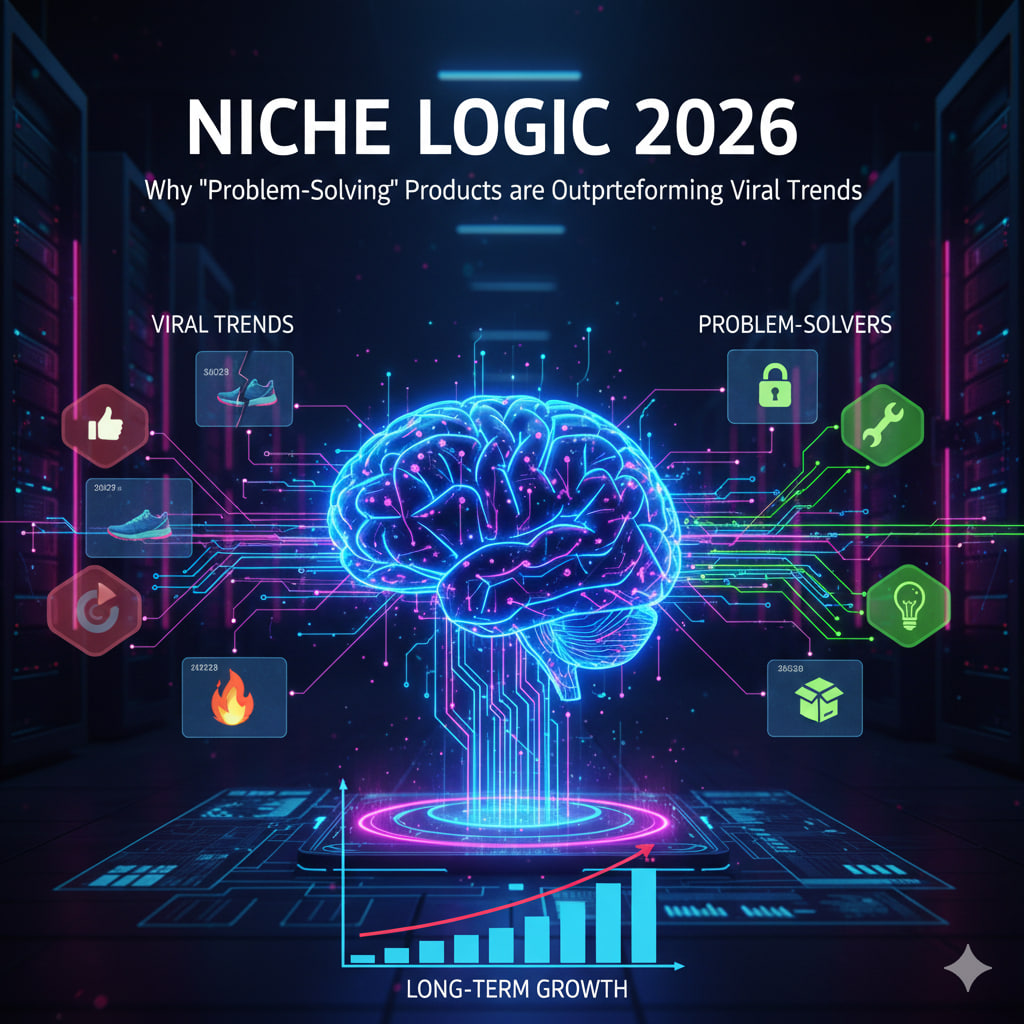
  • Niche Logic 2026 is about building a sustainable business by focusing on products that solve recurring, everyday frustrations. Here is why problem-solvers are winning the long game.

    Niche Logic 2026 is about building a sustainable business by focusing on products that solve recurring, everyday frustrations. Here is why problem-solvers are winning the long game.

    In 2026, the “Gold Rush” of viral impulse buys is being replaced by the “Utility Era.” While viral trends offer a quick spike in sales, they often lead to high return rates and “one-hit wonder” stores.

    Niche Logic 2026 is about building a sustainable business by focusing on products that solve recurring, everyday frustrations. Here is why problem-solvers are winning the long game.


    1. The “Impulse Fatigue” Shift

    By 2026, consumers have become more skeptical of TikTok “must-haves” that end up as clutter. Instead, they are searching for solutions.

    • Viral Trends: Driven by “FOMO” (Fear of Missing Out). These have a shelf life of 3–6 weeks.
    • Problem-Solvers: Driven by “Pain Point Relief.” These have a shelf life of 3–5 years.
    • The Math: Problem-solving products have a 15% lower return rate because the purchase is rooted in logic, not just a dopamine hit.

    2. High-Utility Niches Dominating 2026

    Data from early 2026 shows four specific “utility” sectors outperforming general stores:

    NicheProblem SolvedHero Product Example
    Ergonomic Remote WorkPhysical pain from “WFH” setups.Posture-correcting desk converters.
    Sustainable Home CareWaste and recurring cost of plastics.Modular, refillable cleaning kits.
    Pet Health & SafetyAnxiety about pet well-being.GPS-integrated smart collars.
    Micro-RecoveryMuscle tension and chronic soreness.Portable, percussive heat-therapy pens.

    3. The “Video-to-Value” Marketing Rule

    In 2026, you don’t sell the product; you sell the “Before & After” transformation.

    • The 3-Second Hook: Show the frustration (e.g., a tangled mess of cables).
    • The 5-Second Solution: Show the product in action (e.g., a magnetic cable organizer).
    • The 7-Second Proof: Show the result (e.g., a clean, zen workspace).

    Pro-Tip: AI search engines now prioritize “How-To” and “Review” content. By focusing on a problem-solver, your store will naturally rank for “Intent-Based” searches like “how to fix lower back pain at my desk,” bringing in free, high-intent organic traffic.


    4. Why Logistics Love Problem-Solvers

    Problem-solving products are usually functional, not fashionable.

    1. No Sizing Issues: Unlike apparel, a “smart drain hair catcher” fits every shower. No size charts = fewer returns.
    2. Bundle Potential: If you solve one problem (e.g., messy kitchen drawers), the customer is 40% more likely to buy the “expansion pack” for their pantry.
    3. Subscription Revenue: Many problem-solvers require refills (filters, cleaning pods, etc.), turning a one-time dropshipping customer into a lifetime subscriber.

  • The Death of Slow Shipping: How to Find and Vet Domestic Suppliers for 2-Day Delivery.

    The Death of Slow Shipping: How to Find and Vet Domestic Suppliers for 2-Day Delivery.

    In 2026, the “standard” 3-week shipping time from overseas is no longer a viable business model for most niches. Amazon Prime has conditioned consumers to expect 2-day delivery, and if you can’t provide it, your “Add to Cart” rate will suffer.

    The solution is Domestic Sourcing—finding suppliers who hold inventory in your customer’s country. Here is your 2026 playbook for finding and vetting these high-speed partners.


    1. The 2026 Domestic Supplier Landscape

    Instead of general marketplaces, look for platforms that prioritize “Ships From” filters.

    PlatformBest For2026 Edge
    SpocketUS/EU Sourcing80% of suppliers are local; allows 2–5 day shipping.
    ZendropAutomation & ScalingOffers “Express” shipping from US-based fulfillment centers.
    SynceeGlobal B2BMassive directory with a “Supplier Location” filter for 1-click local sourcing.
    CJ DropshippingHybrid InventoryLets you pre-order stock to their US/EU warehouses for 2-day domestic fulfillment.

    2. How to “Speed-Vet” a Supplier

    Before you list a product, you must verify the supplier isn’t just a “middleman” pretending to be domestic. Use the “Domestic Credibility Test”:

    • The Address Audit: Use Google Maps to check the supplier’s warehouse address. If it leads to a residential home or a virtual mailbox, they likely don’t hold physical stock.
    • The “24-Hour” Response Rule: Message them at 10 AM local time. If they take 12+ hours to respond, their support team is likely in a different time zone (often a sign of an overseas operation).
    • Tracking ID Verification: Ask for a sample tracking number from a recent domestic order. Check the “Origin” city; it should match their stated warehouse location.

    3. The Vetting Checklist (Must-Have Documents)

    In 2026, high-quality domestic suppliers should be able to provide these four items upon request:

    1. Live Inventory Feed: A link (CSV or API) that updates your store so you don’t sell out-of-stock items.
    2. Real-Time Tracking Integration: Proof that they can automatically sync tracking numbers to your Shopify/Wix store.
    3. Return Policy Agreement: A domestic return address. If they tell you “returns go to China,” they aren’t a true domestic partner.
    4. Branded Invoicing: The ability to include your brand’s logo on the packing slip instead of theirs.

    4. The “Hybrid” Strategy for 2026

    Many successful stores use a 70/30 Hybrid Model:

    • 70% Domestic: Your “Hero Products” (best sellers) are sourced from local warehouses to guarantee 2-day shipping and 5-star reviews.
    • 30% International: New or niche products are tested using overseas suppliers. Once a product proves it can sell 10+ units a day, you move it to a domestic partner.

    Pro-Tip: Highlight “Ships from [Country]” on your product page in bold. In 2026, this one line of text is often more effective at closing a sale than a discount code.

  • The High-Ticket Pivot: A Step-by-Step Guide to Dropshipping Premium Tech & Eco-Goods.

    The High-Ticket Pivot: A Step-by-Step Guide to Dropshipping Premium Tech & Eco-Goods.

    In 2026, the dropshipping world has split. While the “low-ticket” market is a race to the bottom with thin margins and high competition, the High-Ticket Pivot is where the real wealth is being built.

    By selling items priced between $500 and $5,000, you only need a handful of sales to replace a full-time income. In 2026, the “sweet spot” for high-ticket goods lies in the intersection of Premium Tech (Smart Home, Biohacking) and Eco-Goods (Solar, Sustainable Mobility).


    1. The High-Ticket Math

    In low-ticket dropshipping, you might make $5 profit on a $20 item. To make $5,000, you need 1,000 customers. In high-ticket, you sell a $2,500 Professional Espresso Machine or a $3,000 Off-Grid Solar Generator with a 25% margin.

    MetricLow-Ticket StoreHigh-Ticket Store
    Average Order Value$25$1,200
    Profit per Sale$5 – $10$250 – $800
    Monthly Sales for $5k Profit500 – 1,0007 – 20
    Customer Support LoadExtremeMinimal (but high-touch)

    2. Sourcing the 2026 “Value Giants”

    The key is to avoid “no-name” generic tech and instead become an Authorized Dealer for established, mid-tier premium brands.

    • Premium Tech: Look for “Work-from-Home Luxury” (standing desks with built-in AI health sensors) or “Smart Security” (multi-camera solar 4K systems).
    • Eco-Goods: The “Energy Independence” niche is exploding. Focus on Portable Power Stations, Home Wind Turbines, or Electric Micro-Mobility (high-end e-scooters and folding bikes).

    3. Step-by-Step Implementation Guide

    Step 1: The “Trust-First” Store Build

    High-ticket buyers don’t buy from “scammy” looking sites. Your store must look like a high-end boutique.

    • Essential Pages: Comprehensive “About Us,” “Warranty Information,” and “Financing Options” (Shop Pay, Affirm, or Klarna are mandatory in 2026).
    • The “Expert” Signal: Include detailed buying guides (e.g., “The Ultimate Guide to Choosing a Home Solar Array”).

    Step 2: Supplier Outreach (The “Pro” Pitch)

    Don’t use AliExpress. Reach out to brands directly or use platforms like Carro or Syncee.

    • The Pitch: “We are [Store Name], focusing on high-end [Niche]. We spend $[X] monthly on Google Shopping ads and provide 24/7 US-based customer support. We’d like to apply to be an authorized retailer.”

    Step 3: High-Intent Marketing (Google vs. Social)

    Viral TikTok ads rarely sell $2,000 items.

    • Google Shopping Ads: Target users searching for specific models (e.g., “EcoFlow Delta Pro price”). They are ready to buy.
    • Retargeting: Since high-ticket items have a longer “consideration phase” (7–14 days), use Meta ads to show testimonials and “Unboxing” videos to people who visited your site but didn’t buy yet.

    4. The 2026 “Secret Sauce”: White-Glove Support

    When someone spends $3,000, they expect to talk to a human.

    • Live Chat: Have a human (not a bot) available during business hours.
    • Concierge Service: Offer a “Pre-Purchase Consultation” to help them choose the right model. This one-on-one time almost guarantees a conversion.

    Risk Mitigation: Always use Shipping Insurance. In high-ticket, one lost or damaged $4,000 crate can wipe out your monthly profit.

  • Contextual Computing: Why Your Next Favorite App Won’t Have an Interface.

    Contextual Computing: Why Your Next Favorite App Won’t Have an Interface.

    Contextual Computing: Why Your Next Favorite App Won’t Have an Interface

    For the last twenty years, the “App Store” model has trained us to find an icon, tap it, and navigate a series of menus to get what we want. In 2026, this is increasingly seen as “digital friction.”

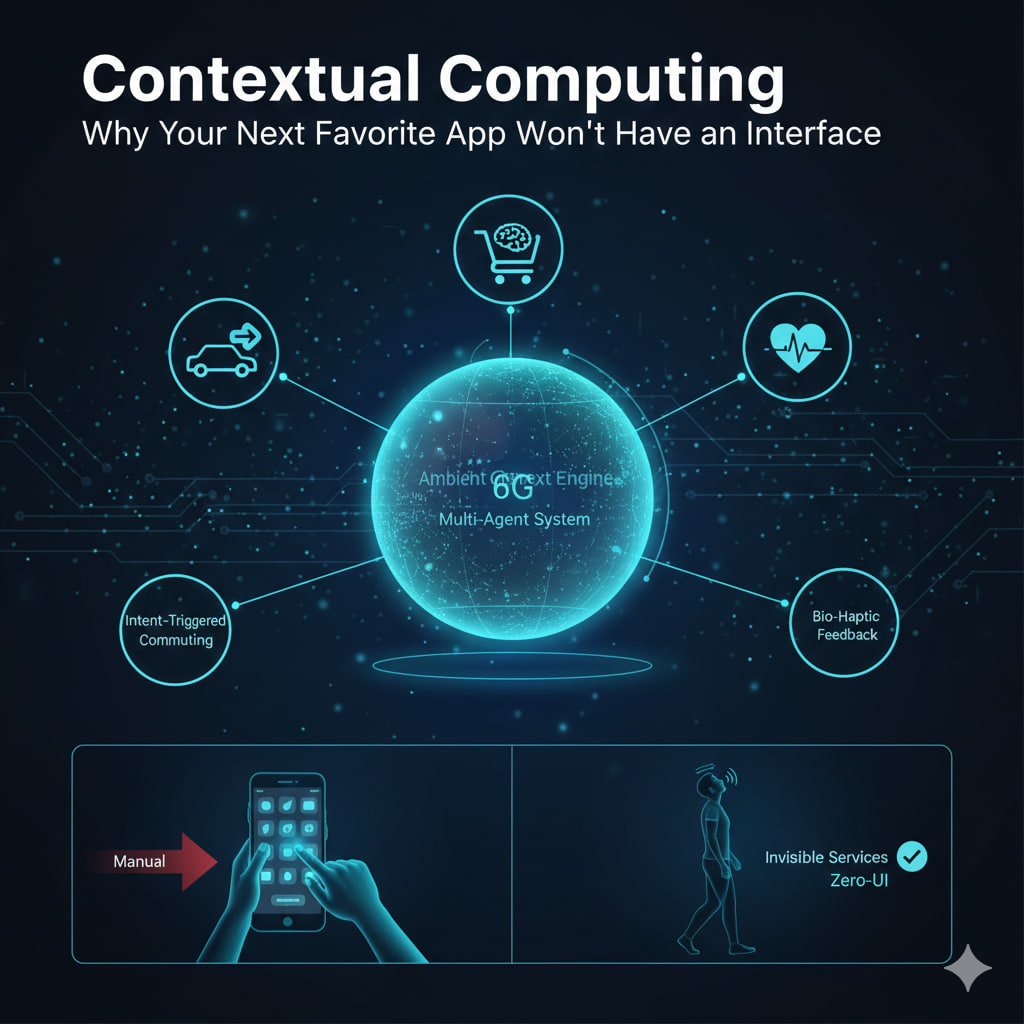
    We are entering the era of Contextual Computing (or “Zero-UI”). The goal is no longer to build a better interface, but to make the interface disappear entirely. Your “apps” are becoming invisible services that live in the background, triggered by your location, biometrics, and intent.


    The 2026 Engine: 6G and Multi-Agent Systems

    Two technologies have finally made “invisible apps” reliable enough for daily use:

    1. 6G Spatial Intelligence: Unlike 5G, 6G uses Terahertz waves that act like a high-resolution “environmental radar.” Your devices now “see” your physical context—recognizing that you’ve sat at your desk, entered a grocery store, or laid down to sleep—without using invasive cameras.
    2. Agentic AI: Instead of a static app, you have “Agents” that communicate with each other. If your “Flight Agent” detects a delay, it automatically negotiates with your “Ride-Share Agent” and “Hotel Agent” to rebook your entire trip before you even check your phone.

    From “User-Initiated” to “Intent-Triggered”

    In 2026, the best user experience is the one that never requires a user to “experience” it.

    ActivityThe 2022 Experience (Manual)The 2026 Experience (Contextual)
    CommutingOpen Maps → Type destination → Select route.Your car/bike knows your 9 AM meeting is in a new building; it pre-loads the route and warms the seat as you walk toward it.
    Grocery ShoppingOpen App → Check list → Scan items.Smart-Shelf Sensing: As you put items in your bag, they are added to a virtual cart. Your “Budget Agent” whispers a haptic pulse on your wrist if you’re over-spending.
    Health & WellnessOpen Fitness App → Log workout → Log sleep.Bio-Haptic Feedback: Your wearables detect rising cortisol levels and automatically dim the lights and play “Focus Audio” in your workspace.

    The “Invisible” Tech Stack

    • Ear-worn AI (Hearables): The primary “interface” is now directional audio. Your apps “talk” to you only when necessary.
    • Neural Wearables: Bracelets (like the Meta-RayBan integration) that read motor intentions from your wrist, allowing you to “click” or “scroll” in mid-air without a physical screen.
    • Confidential Computing: To make this work, apps need to know everything about you. To prevent data leaks, 2026 apps run in “Secure Enclaves”—encrypted digital vaults where not even the app developer can see your raw data.

    The Death of the “App Search”

    In the Contextual Era, you don’t “browse” for apps. Apps are just-in-time services.

    “In 2026, an app isn’t a destination; it’s a behavior.”

    If you walk into a museum, the “Museum App” shouldn’t need to be downloaded. It should simply “attach” itself to your AR glasses or earbuds, providing narration based on exactly what you are looking at, then “detach” and delete its cache when you walk out the exit.


    The Challenge: The “Clarity” Gap

    The biggest hurdle for Contextual Computing is Trust. If things “just happen” in the background, users can feel a loss of agency.

    • The Solution: 2026 design focuses on “Micro-Confirmations.” Instead of a full menu, you get a subtle vibration or a single word in your ear: “Rebooked?” A simple nod of your head (detected by your earbuds) confirms the action.
  • The No-Code Revolution: How to Build Your First App Without Touching a Line of Script.

    The No-Code Revolution: How to Build Your First App Without Touching a Line of Script.

    The No-Code Revolution: How to Build Your First App Without Touching a Line of Script

    For decades, the “Syntax Barrier” was the greatest filter in the business world. If you didn’t know Python, Java, or C++, your digital ideas remained trapped on napkins and slide decks.

    In 2026, that barrier has effectively collapsed. We are witnessing the Great Democratization of Software, where “Citizen Developers”—accountants, entrepreneurs, and marketers—are building complex, enterprise-grade applications using visual interfaces and AI co-creators.


    The 2026 Shift: From “Drag-and-Drop” to “Describe-and-Deploy”

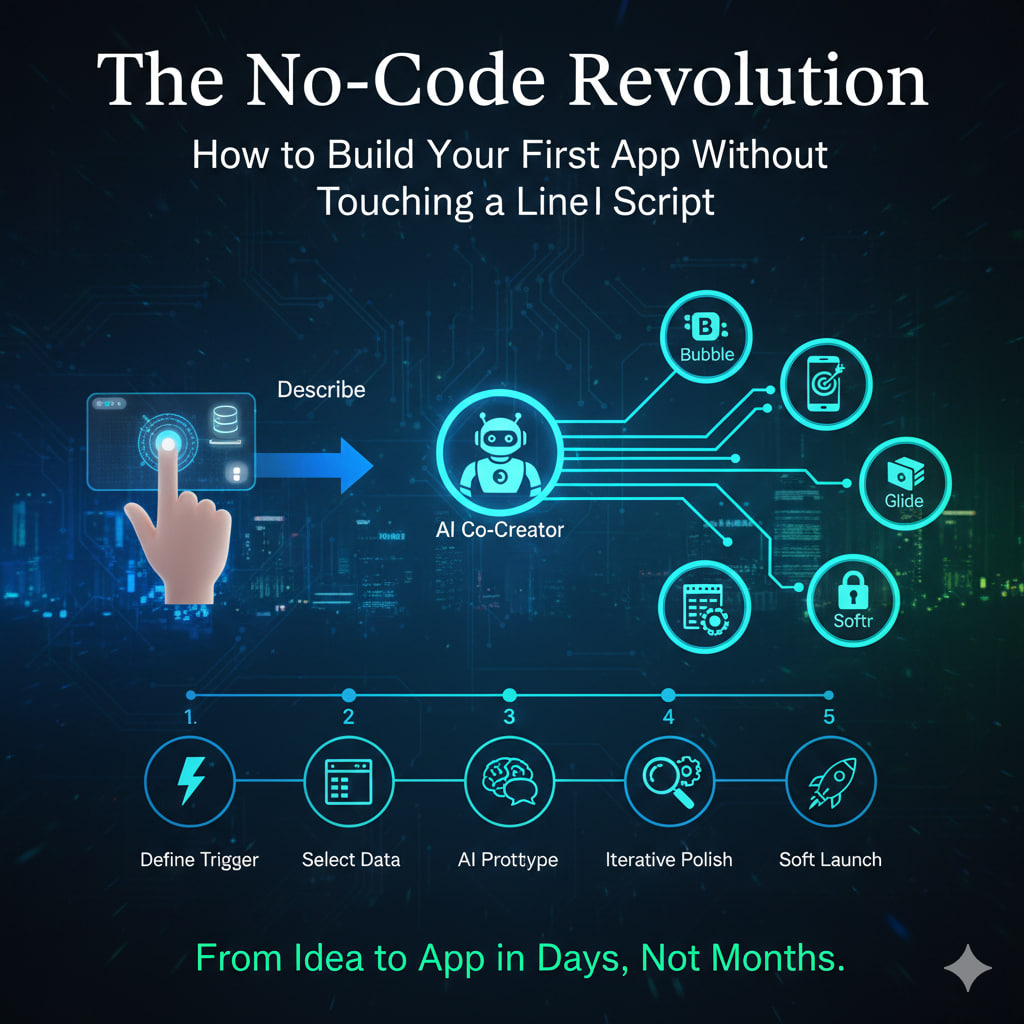
    The previous generation of no-code was about moving boxes on a screen. Today, the revolution is Agentic. Platforms now feature “Autonomous Agents” that can interpret plain-English instructions to generate your database schema, user interface, and backend logic automatically.

    • Development Time: Traditional coding that took 6 months is now being completed in 6 days.
    • Cost Efficiency: No-code AI tools have slashed development costs by up to 90% for startups and small businesses.

    Choosing Your “No-Code Stack” (2026 Power Rankings)

    Your choice of platform depends entirely on your output. In 2026, the market has specialized into distinct “neighborhoods”:

    PlatformBest ForStandout 2026 Feature
    BubbleFull-Stack Web AppsAI “Scaffold” tool that builds entire SaaS frameworks from a single prompt.
    FlutterFlowNative Mobile AppsVisual builder for iOS/Android with one-click publishing to App Stores.
    GlideInternal ToolsTurns a simple Google Sheet or Airtable into a functional app in under 5 minutes.
    SoftrClient PortalsThe fastest way to build secure, gated communities and member directories.
    Replit AgentThe “Vibe Coding” KingAn AI agent that writes, tests, and deploys the code for you based on a conversation.

    The 5-Step Blueprint to Your First App

    Don’t “boil the ocean” on your first try. Follow this proven 2026 workflow:

    1. Define the “Core Trigger”

    What is the one problem your app solves? If it’s a “Retail Inventory App,” the trigger is a user scanning a barcode. Map this logic on paper first: If [Action] → Then [Result].

    2. Select Your Data Source

    Your app is just a “skin” on top of data. For beginners, Airtable or Google Sheets are the most intuitive. Advanced users are moving toward Supabase or Xano for 2026-level scalability.

    3. Prototype with AI “Discuss Mode”

    Use tools like Thunkable or Softr’s AI Generator. Tell the AI: “I need a mobile app for a dog-walking service that allows users to book slots and pay via Stripe.” Let the AI generate the first version.

    4. Iterative Polishing

    Don’t aim for “Pixel Perfect” on day one. Focus on the Workflow. Use “Debug Voice” (literally talking to the AI assistant) to fix logic errors: “The ‘Submit’ button isn’t saving the data to my Sheet. Why?”

    5. The “Soft” Launch

    In 2026, you don’t need a massive server. Most no-code tools offer one-click global CDN deployment. Share your app link with 5 trusted users and watch their “Behavioral Telemetry” to see where they get stuck.


    The Hybrid Reality: Low-Code is the New High-Level

    Note: The “No-Code Revolution” doesn’t mean coding is dead. It means coding has become a Superpower used for the last 5% of customization. In 2026, the most successful builders are “Hybrid Developers” who use no-code for speed and “Low-Code” (small snippets of script) for unique features.

  • Privacy-First Browsing: The Best Apps and Extensions to Reclaim Your Data.

    Privacy-First Browsing: The Best Apps and Extensions to Reclaim Your Data.

    Privacy-First Browsing: The Best Apps and Extensions to Reclaim Your Data

    In 2026, the internet is no longer just “watching” you; it is actively profiling you using AI-driven behavioral tracking. Standard “Incognito” modes are largely a placebo—they hide your history from your spouse, but not from the data brokers.

    To truly reclaim your data, you need a stack that addresses Fingerprinting (making your browser look unique) and Telemetry (the data your browser sends back to its creator).


    The 2026 Browser Power Rankings

    Choosing a browser in 2026 depends on your specific “Threat Model.” Are you hiding from advertisers, or are you seeking total anonymity?

    BrowserBest ForStandout 2026 Feature
    BraveDaily PerformanceShields v3: Automatically blocks 97% of trackers and “bounce tracking” by default.
    Firefox (Hardened)CustomizationOne-Click Privacy Tool: A new 2026 feature that audits and revokes data permissions globally.
    Mullvad BrowserAnti-FingerprintingDesigned with the Tor Project to make your browser look identical to every other Mullvad user.
    Kahf BrowserFamily SafetyRanks #1 in 2026 for AI-powered content filtering and tracker blocking (99.7%).
    Tor BrowserMaximum AnonymityRoutes traffic through three layers of encryption; slow, but the gold standard for journalists.

    Essential 2026 Privacy Extensions

    If you aren’t ready to switch your browser, you must “harden” your existing one with these essential add-ons:

    • uBlock Origin: Still the king. In 2026, it is essential for blocking “malvertising” and heavy script-based trackers.
    • Decentraleyes: Prevents your browser from “calling home” to large Content Delivery Networks (like Google or Amazon) for basic web files.
    • Cookie AutoDelete: Automatically wipes cookies the moment you close a tab, preventing “cross-site” tracking.
    • ClearURLs: Many links in 2026 contain long strings of tracking code (e.g., ?utm_source=...). This extension strips them automatically before the page loads.

    The “Privacy Stack” Beyond the Browser

    Browsing is only one part of your digital footprint. To truly disappear from the “Data Economy,” consider these three tools:

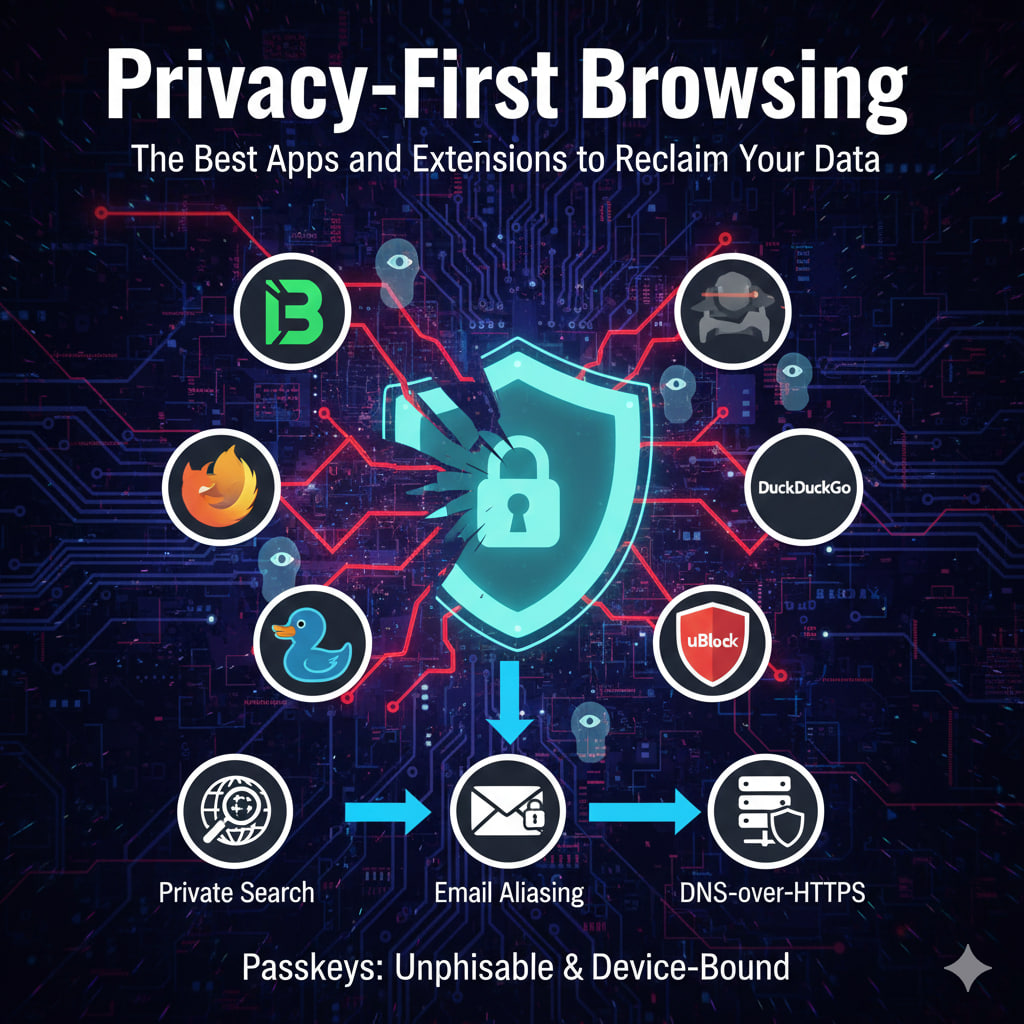
    1. Private Search Engines

    Stop using search engines that “personalize” results (which is code for “building a profile”).

    • Brave Search: Uses its own independent index rather than relying on Google/Bing.
    • DuckDuckGo: The classic choice, now featuring an integrated “App Tracking Protection” for mobile.
    • Mojeek: A true “no-log” crawler based in the UK with a completely independent index.

    2. Email Aliasing (The “Burner” Strategy)

    Never give your real email to a website. Use SimpleLogin or DuckDuckGo Email Protection to generate unique aliases. If a site starts spamming you or sells your data, you can simply delete that specific alias.

    3. DNS-over-HTTPS (DoH)

    Even if you use a private browser, your Internet Service Provider (ISP) can see which websites you visit via your DNS requests. Switching to NextDNS or Cloudflare (1.1.1.1) encrypts these requests, hiding your destination from your ISP.


    The 2026 Pro-Tip: Passkeys over Passwords

    As of early 2026, nearly 50% of major websites support Passkeys. Unlike passwords, passkeys cannot be phished because they are tied to your physical device. Switching to passkeys removes the “Credential Leak” risk that often leads to identity theft.

    “Data is the new oil, but your privacy is the new gold. Don’t give it away for the convenience of a ‘Remember Me’ button.”

  • The Ambient Home: How Matter and 6G are Finally Making the Smart Home

    The Ambient Home: How Matter and 6G are Finally Making the Smart Home

    The Ambient Home: How Matter and 6G are Finally Making the Smart Home “Smart”

    For years, the “smart home” was more of a “polite hobby.” It required dozens of fragmented apps, constant troubleshooting, and a frustrating amount of manual input. You didn’t live in a smart home; you managed a digital museum of gadgets.

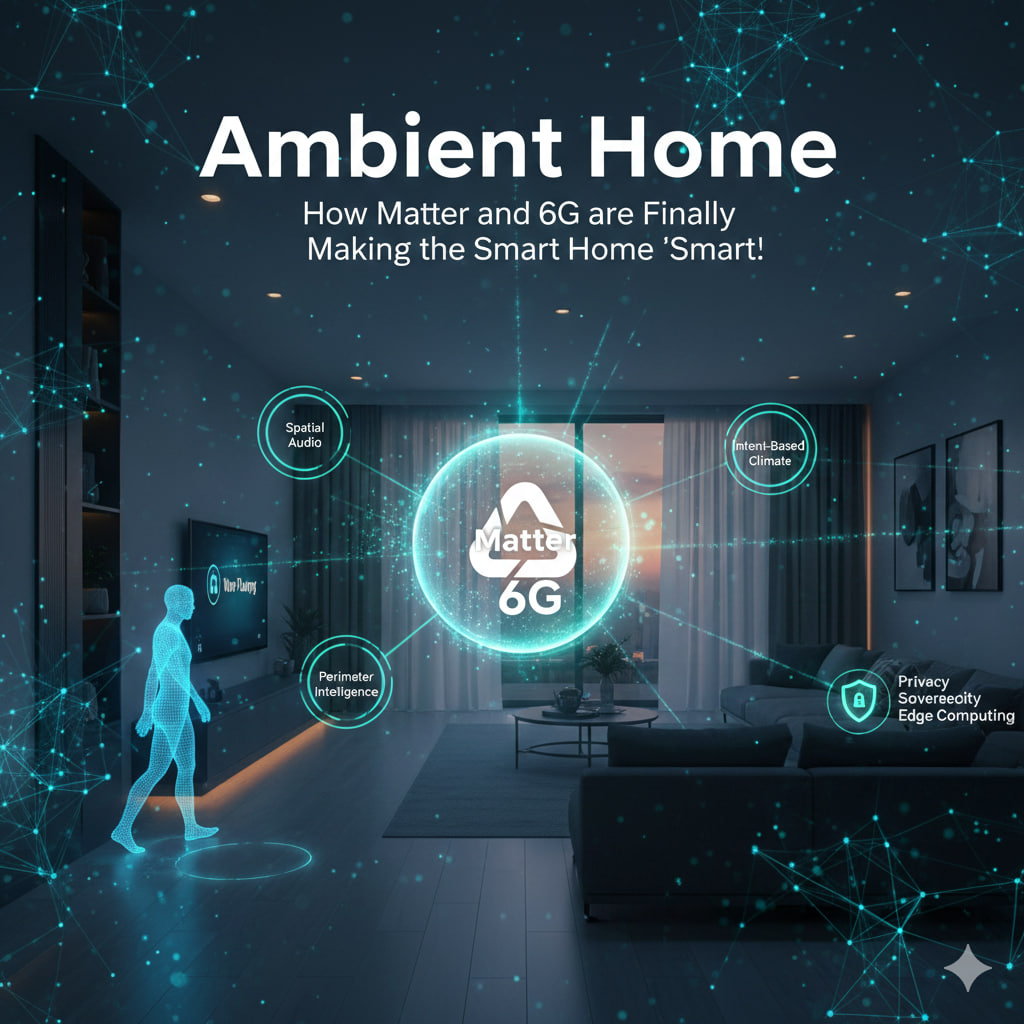
    By 2026, two massive technological waves—Matter and 6G—have converged to create the Ambient Home. In this new era, technology isn’t something you use; it’s something that happens around you, quietly and invisibly.


    The Two Pillars of Ambient Living

    1. Matter: The Universal Translator

    Before 2024, if you bought a smart bulb, you had to check if it worked with “Apple Home,” “Google Home,” or “Alexa.” Matter has ended the “walled garden” era. It is a unified communication standard that allows devices from different brands to talk to each other directly.

    • The Result: Your Philips Hue lights can now trigger your Google Nest thermostat to lower the temperature when the curtains (by Ikea) close for a movie. No bridges, no hubs, no headaches.
    • Local Processing: Matter runs locally on your home network. If your internet goes out, your smart home still works.

    2. 6G: The Nervous System

    While 5G brought speed, 6G (entering early commercial rollout in 2026) brings Microsecond Latency and Spatial Intelligence.

    • Zero Lag: At speeds potentially reaching 1 Tbps, devices react at the speed of human thought.
    • Sensor Fusion: 6G uses “Terahertz waves” which can act like a low-resolution radar. This allows your home to “see” your posture—detecting if an elderly relative has fallen or if you’ve simply sat down on the couch—without using privacy-invasive cameras.

    From “Reactive” to “Predictive” Automation

    In 2026, we’ve moved past the “Hey Siri, turn on the lights” phase. The Ambient Home is Intent-Based.

    FeatureThe 2022 Version (Reactive)The 2026 Version (Ambient)
    LightingYou press a button or say a command.Lights track your movement, dimming behind you and brightening ahead of you.
    ClimateYou set a schedule on your phone.AI analyzes the local weather forecast and your biometric data (via your watch) to adjust the temp before you feel cold.
    SecurityYou check a camera feed.Perimeter Intelligence: The home distinguishes between a delivery driver, a neighbor, and a stranger, only alerting you if an anomaly is detected.

    The “Invisible” Interface

    The most significant trend of 2026 is the Disappearing Screen.

    • Voice + Emotion: 6G-powered AI can now detect stress or fatigue in your voice, automatically playing calming audio or shifting lighting to “Crest” mode to boost your mood.
    • Spatial Audio: Sound follows you from room to room. Your podcast doesn’t stop; it simply “migrates” to the speakers in the kitchen as you walk in to grab a coffee.

    The Privacy Trade-off

    Note: Ambient technology requires a massive amount of “Contextual Data.” In 2026, the leading smart home brands compete on Privacy Sovereignty. The “Edge Computing” trend ensures that your heart rate, movement patterns, and voice snippets are processed on a small chip in your home wall, rather than being sent to a corporate cloud.


    How to “Ambient-ize” Your Home Today

    1. Look for the Logo: Only buy devices with the Matter over Thread logo. These are the most future-proof.
    2. Audit Your Hubs: Switch to a “Universal Controller” (like the latest Apple HomePod or Google Nest Hubs) that acts as a Matter Border Router.
    3. Invest in Sensors, Not Switches: The key to an ambient home is Presence Sensors (like the Aqara FP2), which detect “static presence” (sitting still) rather than just “motion.”
  • Beyond the Prompt: Advanced Techniques to Turn AI into Your Personal Research Team.

    Beyond the Prompt: Advanced Techniques to Turn AI into Your Personal Research Team.

    Beyond the Prompt: Advanced Techniques to Turn AI into Your Personal Research Team

    In 2026, we have moved past the “Vending Machine” era of AI. If you are still just “asking questions,” you are only using 10% of the technology’s capability. To truly unlock AI, you must stop treating it as an encyclopedia and start treating it as a Research Department.

    Advanced researchers now use Agentic Workflows—systems where the AI doesn’t just answer, but plans, executes, cross-references, and critiques its own work.


    1. From “Prompting” to “Orchestration”

    The secret to 2026 research is Chain-of-Thought (CoT) and Tree-of-Thought (ToT) reasoning. Instead of one long prompt, you break the task into a multi-step pipeline.

    • The Researcher (Step 1): Instruct the AI to find 10 diverse perspectives on a topic.
    • The Analyst (Step 2): Use a second AI instance (or a distinct prompt) to identify contradictions between those 10 perspectives.
    • The Fact-Checker (Step 3): Ask the AI to play “Devil’s Advocate” and try to disprove its own previous analysis.

    2. The “Agentic” Toolkit for 2026

    Tool Type2026 Industry StandardBest For
    Grounded DiscoveryNotebookLMUploading 50+ PDFs and “chatting” only with your specific sources (Zero Hallucination).
    Evidence ExtractionConsensus / ElicitSearching 200M+ academic papers and getting a “Consensus Meter” on scientific agreement.
    Synthesis EnginesChatGPT Deep ResearchLong-form, multi-hour autonomous research that crawls the live web and synthesizes deep reports.

    3. Advanced Technique: Observational Framing

    A major shift in 2026 is moving from Evaluative to Observational framing.

    • Old Way (Evaluative): “Explain why this technology is better than that one.” (This forces the AI to pick a side and hallucinate supporting “facts.”)
    • New Way (Observational): “Compare these two technologies and report the specific patterns you observe in their use cases. What are the common points of failure for both?”

    Pro Tip: By removing the “Confidence Demand,” you allow the AI to report uncertainty, which is far more valuable for real research.


    4. Building Your “Research Circle” (Holacratic AI)

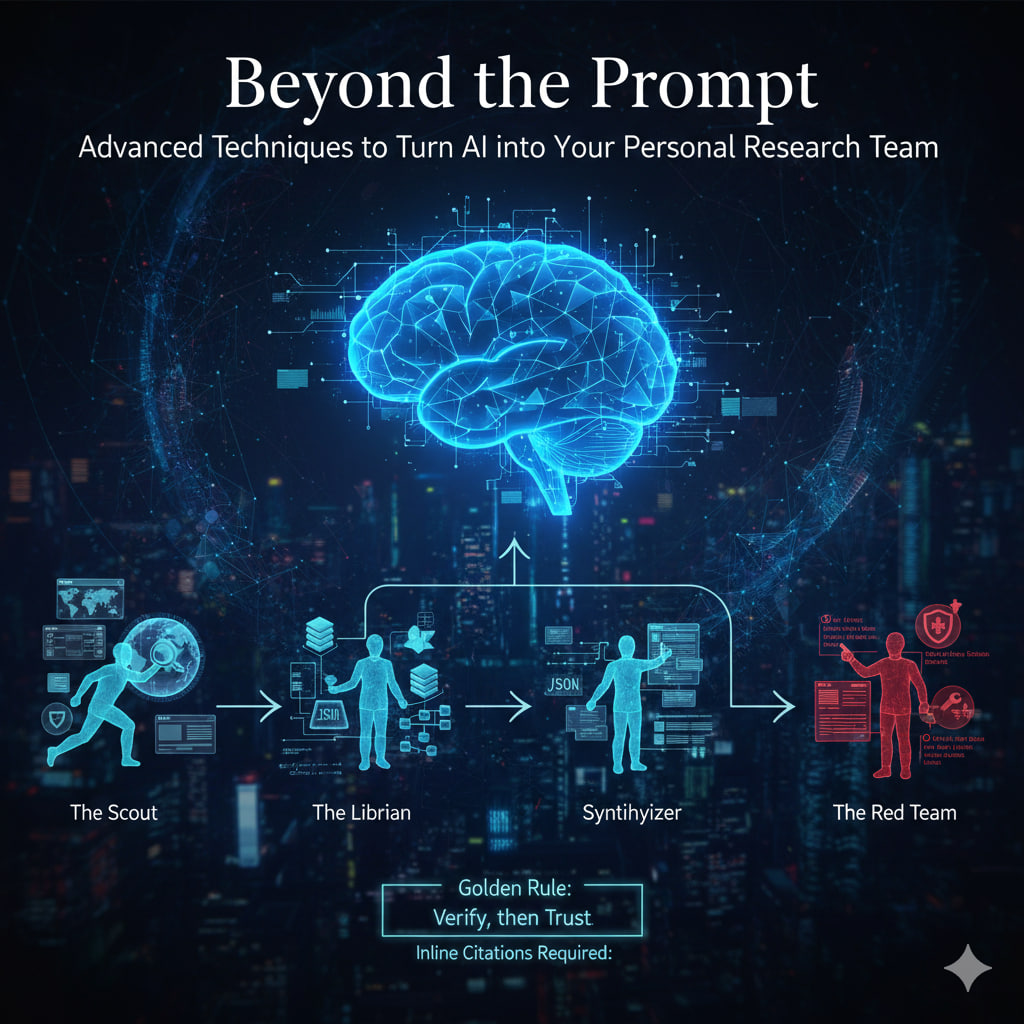
    Modern researchers build AI Personas that work together in a digital “Circle”:

    1. The Scout: Scans the web for the latest data.
    2. The Librarian: Organizes the data into structured tables or JSON.
    3. The Synthesizer: Writes the final executive summary.
    4. The Red Team: Specifically looks for biases, outdated information (pre-2025), or logical fallacies in the summary.

    The “Golden Rule” of 2026 Research

    Verify, then Trust. > Use AI to find the needle in the haystack, but never let it tell you what the needle is made of without a direct citation link. In 2026, a research paper without Inline Citations is considered a draft, not a finished product.

  • The “Quiet Ambition” Era: Redefining Success Beyond the Corner Office

    The “Quiet Ambition” Era: Redefining Success Beyond the Corner Office

    The “Quiet Ambition” Era: Redefining Success Beyond the Corner Office

    In the early 2020s, the “Hustle Culture” reached its fever pitch. We were told to “rise and grind,” optimize every second for monetization, and sacrifice our health for a title. But by 2026, the pendulum has swung. We are now living in the era of Quiet Ambition.

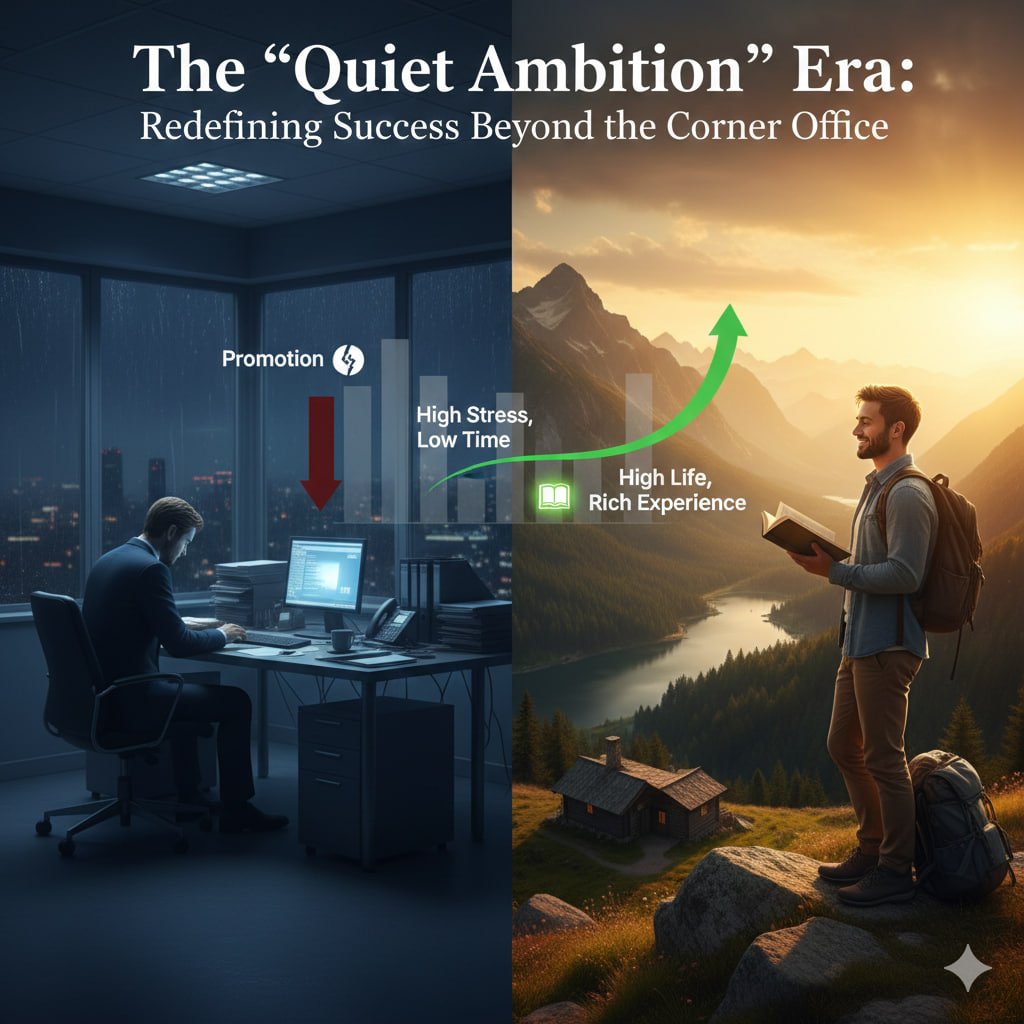
    Quiet Ambition isn’t about a lack of drive; it’s about a redirection of drive. It is the conscious choice to decouple “success” from “climbing the corporate ladder.” People are no longer asking, “How do I get my boss’s job?” Instead, they are asking, “How do I build a life I don’t need a vacation from?”


    The Shift: From Vertical to Horizontal Growth

    The traditional career path was a vertical line. Quiet Ambition treats a career as a Portfolio of Experiences.

    • Vertical Ambition: Chasing the VP title, managing 50 people, and accepting a 24/7 “on-call” lifestyle for a 20% raise.
    • Quiet (Horizontal) Ambition: Mastering a high-value skill, working 30 hours a week, and using the reclaimed time for “Wealth of Life”—hobbies, family, and community.

    The Three Drivers of Quiet Ambition

    1. The “Middle Management” Burnout

    The realization has set in that middle management is the most stressed layer of the workforce. They bear the pressure from the top and the complaints from the bottom. Quietly ambitious workers are increasingly opting out of management tracks to remain “Individual Contributors” (ICs), where they can focus on the work they actually enjoy.

    2. The Experience Economy

    In 2026, status symbols have shifted. A corner office or a luxury car carries less social weight than the ability to spend a Tuesday afternoon hiking or the freedom to work from a different country for three months a year. Time is the new Rolex.

    3. The “Identity Divorce”

    We are seeing a mass “identity divorce” where people no longer introduce themselves by their job title. When your identity isn’t tied to your employer, you are less likely to sacrifice your well-being for a “Senior” prefix on your LinkedIn profile.


    How Companies are Adapting

    Forward-thinking organizations are realizing they can’t motivate this new workforce with titles alone. They are implementing:

    Traditional IncentiveQuiet Ambition Alternative
    Promotion to ManagerSubject Matter Expert (SME) Tracks
    Performance BonusesSabbatical Credits & Time-Off Bonuses
    Office Perks (Snacks/Gym)Radical Flexibility & Remote Autonomy

    Are You Quietly Ambitious?

    You might be part of this movement if you:

    • Have turned down a promotion because it would “ruin your schedule.”
    • Value “Flow State” more than “Face Time” in meetings.
    • Work to fund your life, rather than living to fuel your work.
    • Prioritize “Peace of Mind” as a key performance indicator.

    “Quiet Ambition is the realization that ‘making it’ doesn’t mean having the most power; it means having the most agency over your own Tuesday morning.”

  • The Green Bottom Line: How Sustainability-First Companies are Outperforming the Market.

    The Green Bottom Line: How Sustainability-First Companies are Outperforming the Market.

    The Green Bottom Line: How Sustainability-First Companies are Outperforming the Market

    For decades, the prevailing corporate wisdom was that sustainability was a “cost center”—an expensive philanthropic endeavor that came at the expense of shareholder profits.

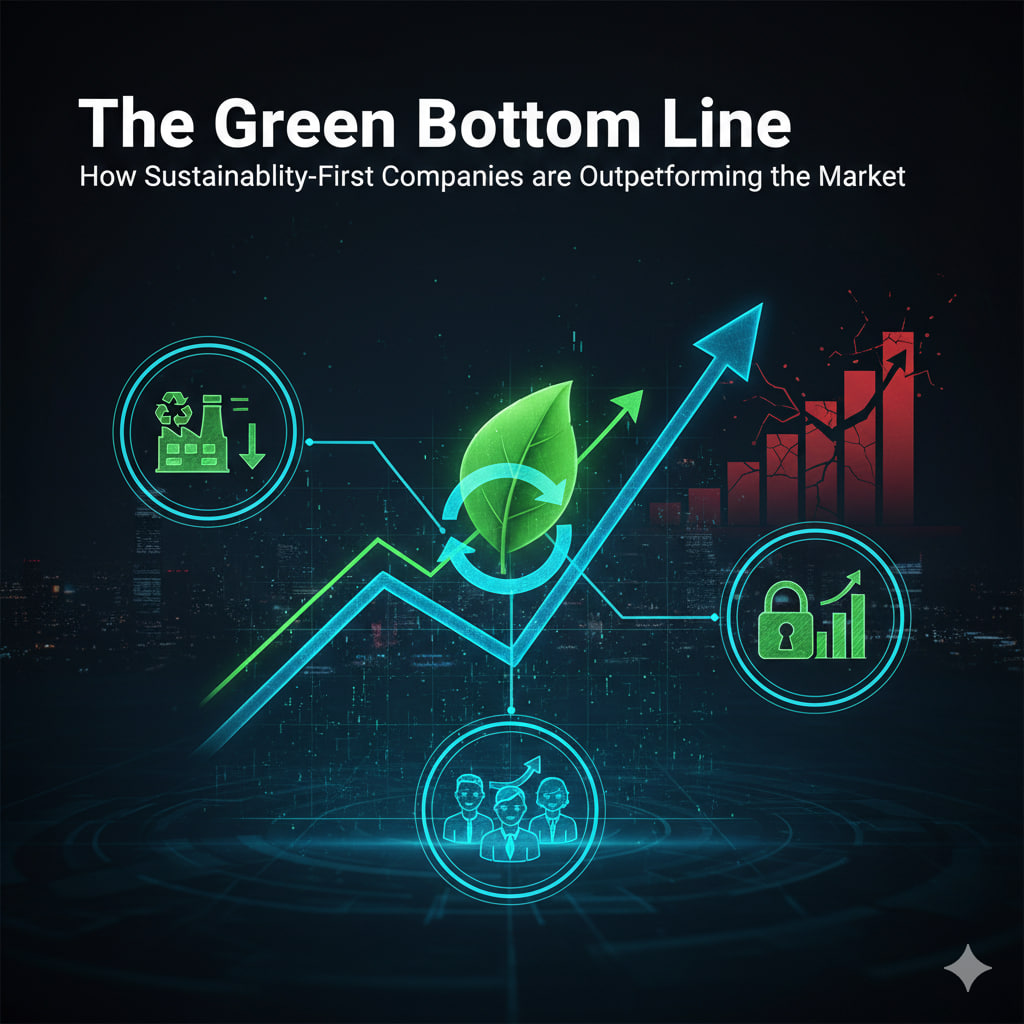
    By 2026, that narrative has been completely inverted. Data from the global markets shows a clear trend: companies that prioritize Environmental, Social, and Governance (ESG) metrics are not just “doing good”—they are consistently outperforming their less-sustainable competitors in terms of stock price, talent acquisition, and long-term resilience.


    The “Sustainability Premium”

    Why are green companies winning? It’s not just about positive PR; it’s about Efficiency and Risk Mitigation.

    1. Resource Circularity equals Cost Savings

    Sustainability-first companies don’t just “reduce waste”; they implement Circular Economy models. By designing products that can be easily refurbished or recycled, they reduce their dependence on volatile raw material markets.

    • The ROI: Companies using circular supply chains have seen a 15–20% reduction in manufacturing costs as they “mine” their own old products for parts.

    2. The War for Talent

    In 2026, the labor market is driven by values. Over 75% of Gen Z and Millennial workers—who now make up the majority of the global workforce—state they would take a pay cut to work for a company with a strong environmental mission.

    • The ROI: Lower turnover rates and higher employee engagement lead to significantly lower recruitment costs and higher “Output per Human Hour.”

    3. Lower Cost of Capital

    Financial institutions have recognized that climate change is a financial risk. Consequently, “Green Bonds” and sustainability-linked loans offer lower interest rates to companies that hit specific carbon-reduction targets.

    • The ROI: Sustainability-first firms often enjoy a 50 to 100 basis point advantage in their cost of debt compared to “Brown” (polluting) firms.

    The Risk of the “Laggard Penalty”

    While green companies are rewarded, “laggards” are facing a mounting penalty:

    • Stranded Assets: Fossil-fuel-heavy infrastructure is being devalued faster than anticipated.
    • Regulatory Walls: New carbon taxes in the EU and North America are turning “cheap” polluting processes into “expensive” liabilities.

    How to Implement a “Green Bottom Line” Strategy

    Moving toward sustainability requires a shift from compliance to strategy.

    Focus AreaTraditional ApproachSustainability-First Approach
    Supply ChainLowest cost, regardless of source.Resilience-First: Localized, low-carbon, and ethically audited.
    Product DesignPlanned obsolescence.Design for Longevity: Modular parts and “Product-as-a-Service” models.
    ReportingFinancials only.Double Materiality: Reporting on how the world affects the company and how the company affects the world.

    The 2026 Verdict

    The “Green Bottom Line” proves that the interests of the planet and the interests of the portfolio are finally aligned. In the high-transparency era of 2026, you cannot hide a dirty supply chain, and you cannot afford the inefficiency of waste.

    “Sustainability is no longer a moral choice; it is a fiduciary duty. If you aren’t green, you’re eventually going to be in the red.”