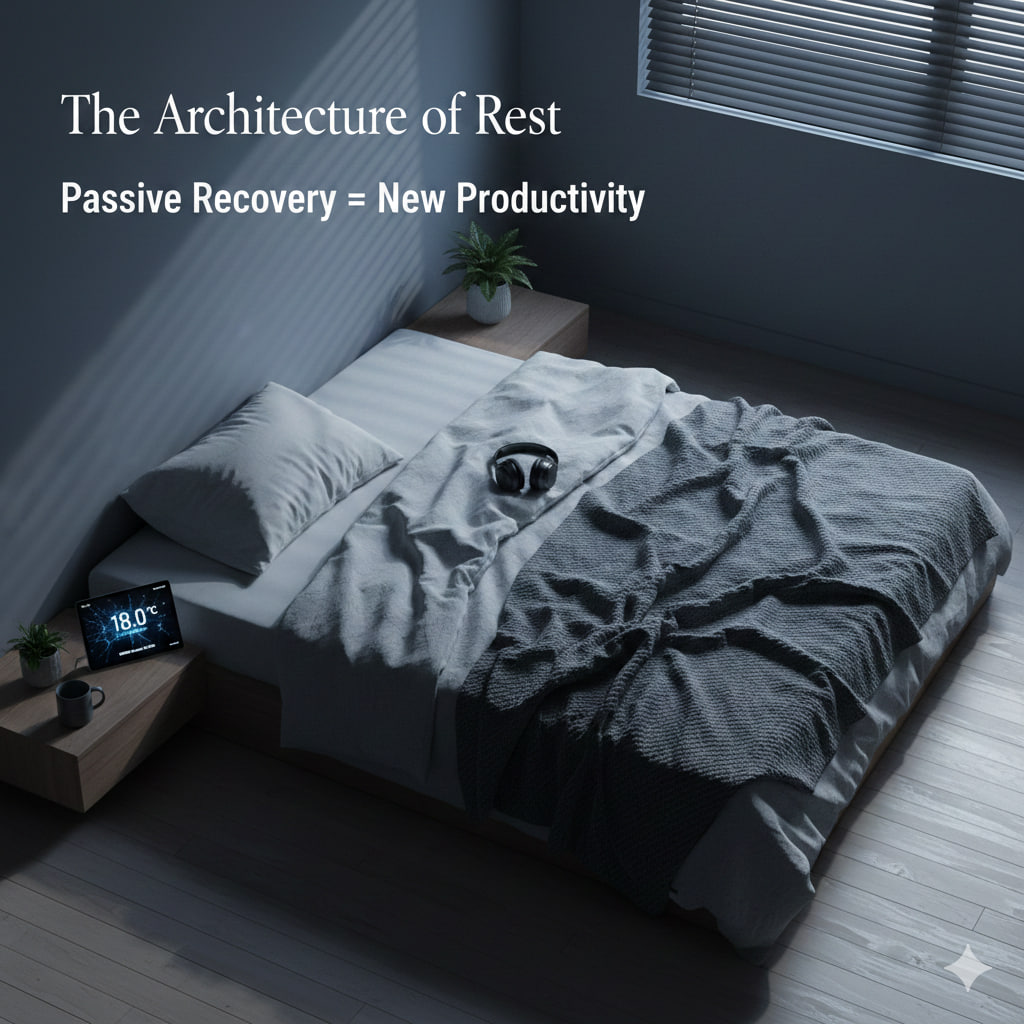
The Architecture of Rest: Why “Passive Recovery” is the New Productivity
For decades, we’ve been sold a lie: that the only way to achieve more is to do more. We’ve glamorized the “grind,” turned caffeine into a food group, and treated sleep as a luxury for the unmotivated.
But in 2026, the data is in, and the verdict is clear. High performance isn’t built in the gym or the boardroom—it’s built during Passive Recovery. We are shifting away from “active” stress management (which often feels like just another to-do item) toward a structured architecture of rest.
What is Passive Recovery?
Unlike active recovery (like light jogging or yoga), Passive Recovery requires total stillness. It is the physiological equivalent of hitting the “save” button on your progress. It’s the time when your nervous system switches from Sympathetic (fight or flight) to Parasympathetic (rest and digest).
- Physical Level: It’s when protein synthesis repairs muscle tissue and the lymphatic system flushes metabolic waste.
- Cognitive Level: It’s when the brain’s glymphatic system clears out beta-amyloid plaques—essentially “washing” your brain while you remain still.
The Three Pillars of the “Rest Architecture”
To master passive recovery, you must design your environment to support it. It isn’t just “laziness”; it’s a strategic shutdown.
1. Sensory Deprivation
Our world is louder than ever. Passive recovery involves “Sensory Minimums.”
- Darkness: Using 100% blackout environments to trigger maximum melatonin production.
- Silence: Using active noise-canceling technology or “pink noise” to lower the startle response of the brain.
2. Thermal Regulation
Research shows that a drop in core body temperature is the primary biological signal that it’s time to recover.
- The 18°C Rule: Keeping your recovery environment at approximately 18°C (65°F) allows the body to sink into deep-state repair without the metabolic cost of trying to stay cool.
3. Cognitive Stillness (Non-Sleep Deep Rest)
You don’t always have to be unconscious to recover. NSDR (Non-Sleep Deep Rest) or Yoga Nidra involves lying still and guided breathing. 20 minutes of NSDR can provide a neurochemical reset similar to a 90-minute nap, without the “sleep inertia” grogginess.
Why Rest is the Ultimate Competitive Advantage
In an economy driven by AI, human value is no longer about “output volume”—it’s about quality of judgment and creative breakthroughs.
“A tired brain relies on patterns and shortcuts. A rested brain sees connections that don’t exist yet.”
When you prioritize passive recovery, you aren’t “taking a break” from work; you are performing the most essential part of the work. You are maintaining the machinery. In 2026, the person who rests the best is the person who performs the best.
Quick Tips to Start Your Architecture of Rest
| Action | Benefit |
| Phone-Free Hour | Removes the “anticipatory stress” of notifications. |
| Horizontal Time | Simply lying flat for 15 minutes to reset spinal pressure. |
| Weighted Blankets | Uses deep pressure touch to lower cortisol levels. |
Leave a Reply